
Earnings Gap Up: When I Hold, Add, or Trim

Ross
Ross is a co-founder of TraderLion and Deepvue. He was mentored by William O’Neil, and co-authored The Model Book of Greatest Stock Market Winners at WON + Co.
Published: November 11, 2026


 Ross Haber
Every new post, straight to your inbox
If this was useful, the next one will land in your inbox the day I write it.
What Should You Do After an Earnings Gap Up?
An earnings gap up feels like a reward. You held through the report, the numbers came in, and the stock opened 10% or 15% higher. The natural reaction is to either grab the profit or assume the move is just getting started.
Neither is a plan. A gap is new information, and the market is repricing the stock in a single morning. What I do next depends on what the gap is telling me, not how good it feels. It’s a breakout with a lot more fuel behind it, and it can work or fail the same way.
Why Earnings Gap Ups Matter
Bill O’Neil put current quarterly earnings first in CAN SLIM for a reason. The biggest winners almost always had a quarter, or a string of quarters, that forced institutions to rethink the company’s worth. That repricing often shows up as a gap on huge volume.
Institutions are aircraft carriers. They can’t turn around in a day. When a fund decides it wants a big position after a report, it buys over weeks and months, not one morning. That’s why a strong gap out of a base can be the first day of a long advance, not the last.
Stan Weinstein adds the context. The same gap means different things in different stages. A gap that lifts a stock out of a Stage 1 base and into Stage 2 is a beginning. A gap late in Stage 2, after a long run, can be an exhaustion move as the last buyers pile in.
How I Handle an Earnings Gap Up
I ask the same questions every time, in the same order.
Where did it gap from?
Out of a proper base, a launchpad, or a consolidation pivot, early in the move? That’s the gap I want to own more of. After several bases and a long run, already well extended from the 21-day SMA? That’s a gap I’m more likely to sell into.
Does the gap hold?
- Where does it close? A close in the upper part of the day’s range says buyers stayed in control. A close near the low says they didn’t.
- How heavy is the volume? Big blue: I want volume well above average on the gap day.
- What happens over the next few days? A strong gap tends to hold above the gap day low and build a tight area on top. A weak one starts filling the gap.
Hold, add, or trim
- Hold: the gap came from a sound setup, closed strong, and the stock is holding above the gap day low. I let it work.
- Add: the gap held, the stock builds a tight area above the gap, and I have a cushion. That tight area can give me a lower-risk spot to add.
- Trim: the gap came late in a long run, the stock is far extended, or it’s acting like a climax. I’d rather sell into strength than give it all back.
What it looks like when it fails
A gap that can’t hold is information too. If the stock closes below the gap day low, the buyers who showed up on the news are underwater, and the gap is likely to fill. Late-stage gaps that reverse the same day are the most dangerous. When that happens, I don’t wait for the 21-day SMA. The reason I owned it changed, so the position changes with it.
Three Gaps, Three Decisions
Three earnings gaps, each handled differently.
The gap to hold
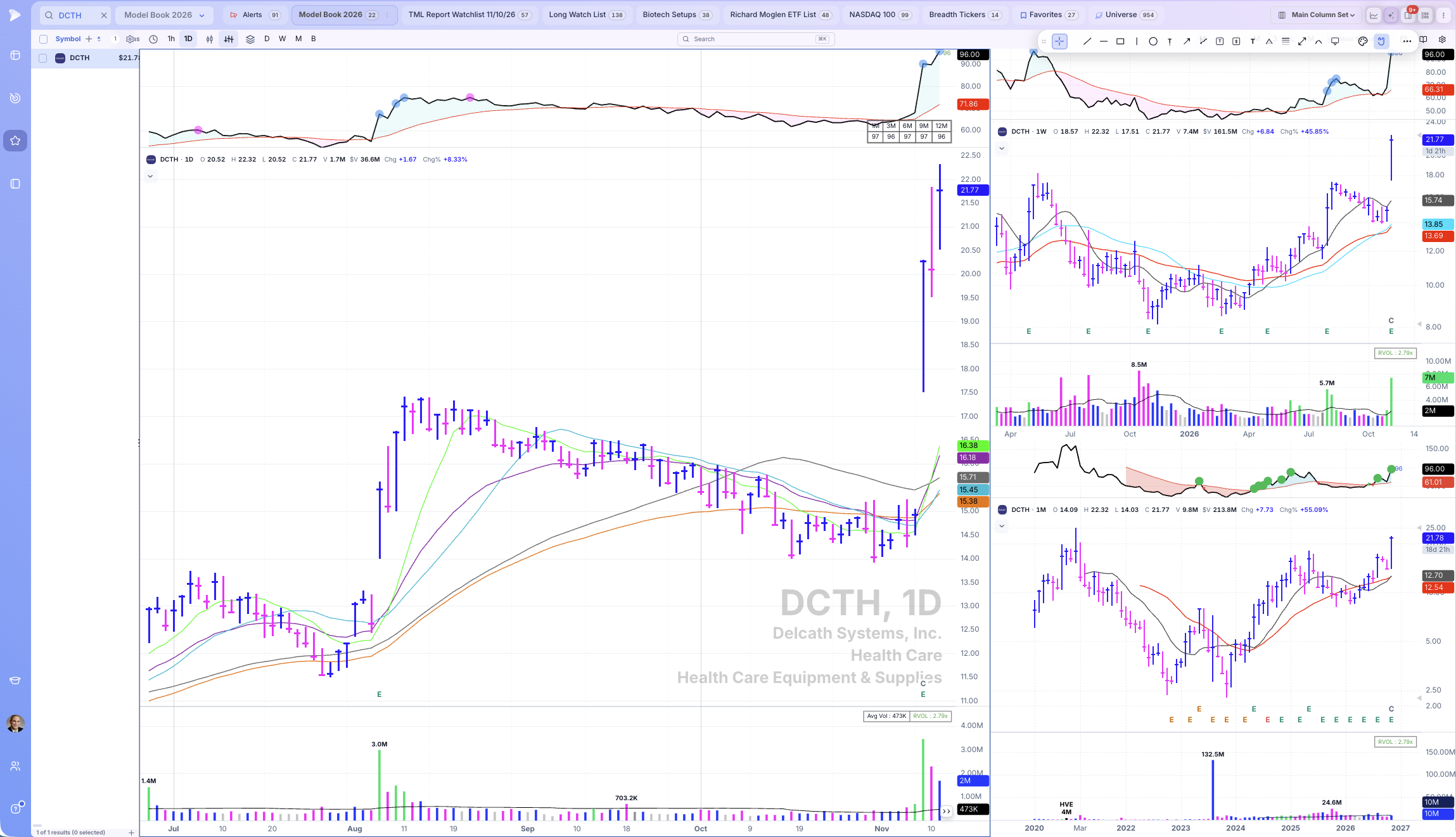
Gapped out of the base on heavy volume, closed strong, and never looked back at the gap day low.
This one gapped out of a sound base, early in the move. It closed in the upper part of its range on heavy volume, and over the following days it held above the gap day low. There was nothing to do but let it work.
The gap to add to
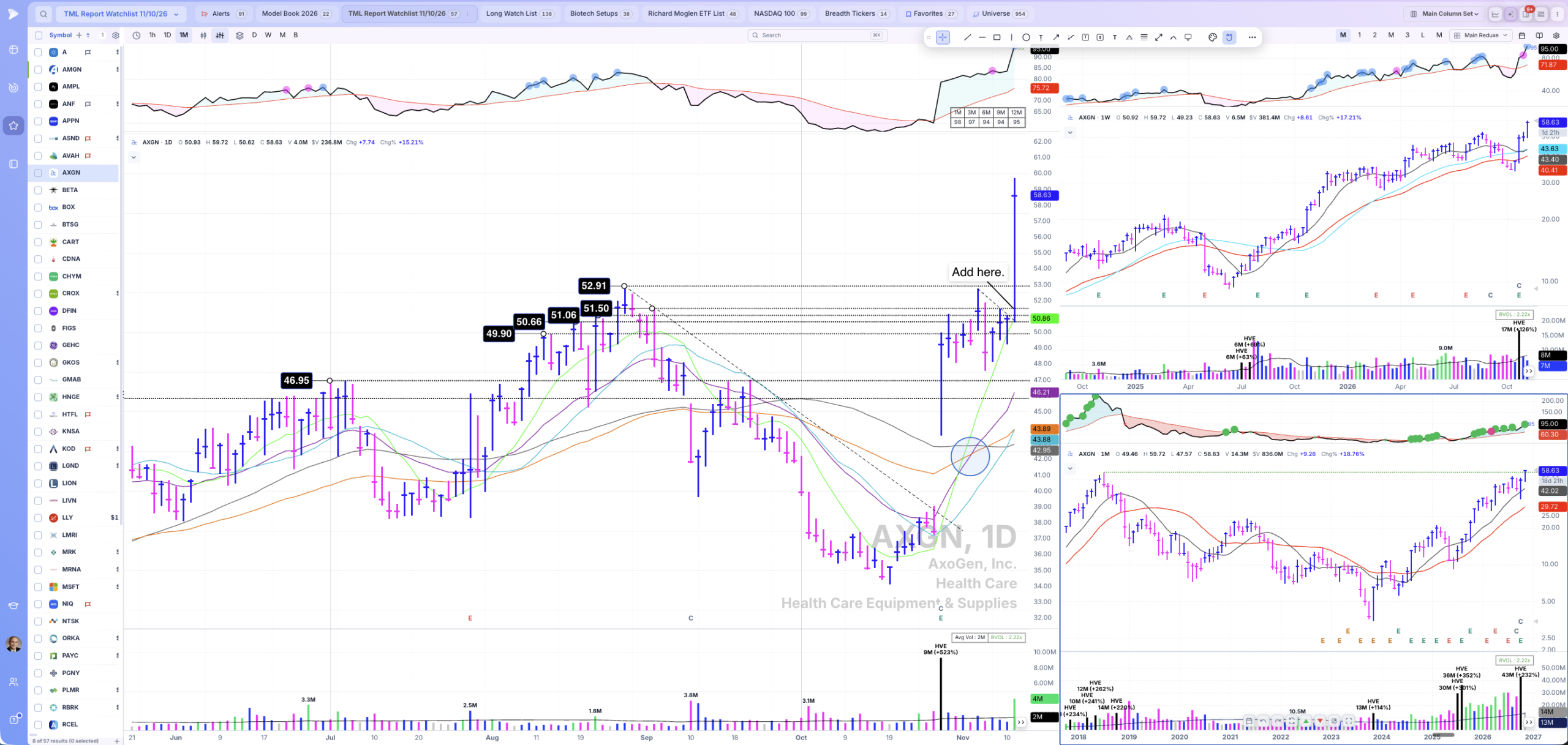
The gap held. A tight area formed on top. That was the add.
This one held its gap, then went sideways in a tight range for several days on lighter volume. That tight area gave a clear place to add, with a stop just below it, and the cushion from the original position covered the risk.
The gaps to sell into
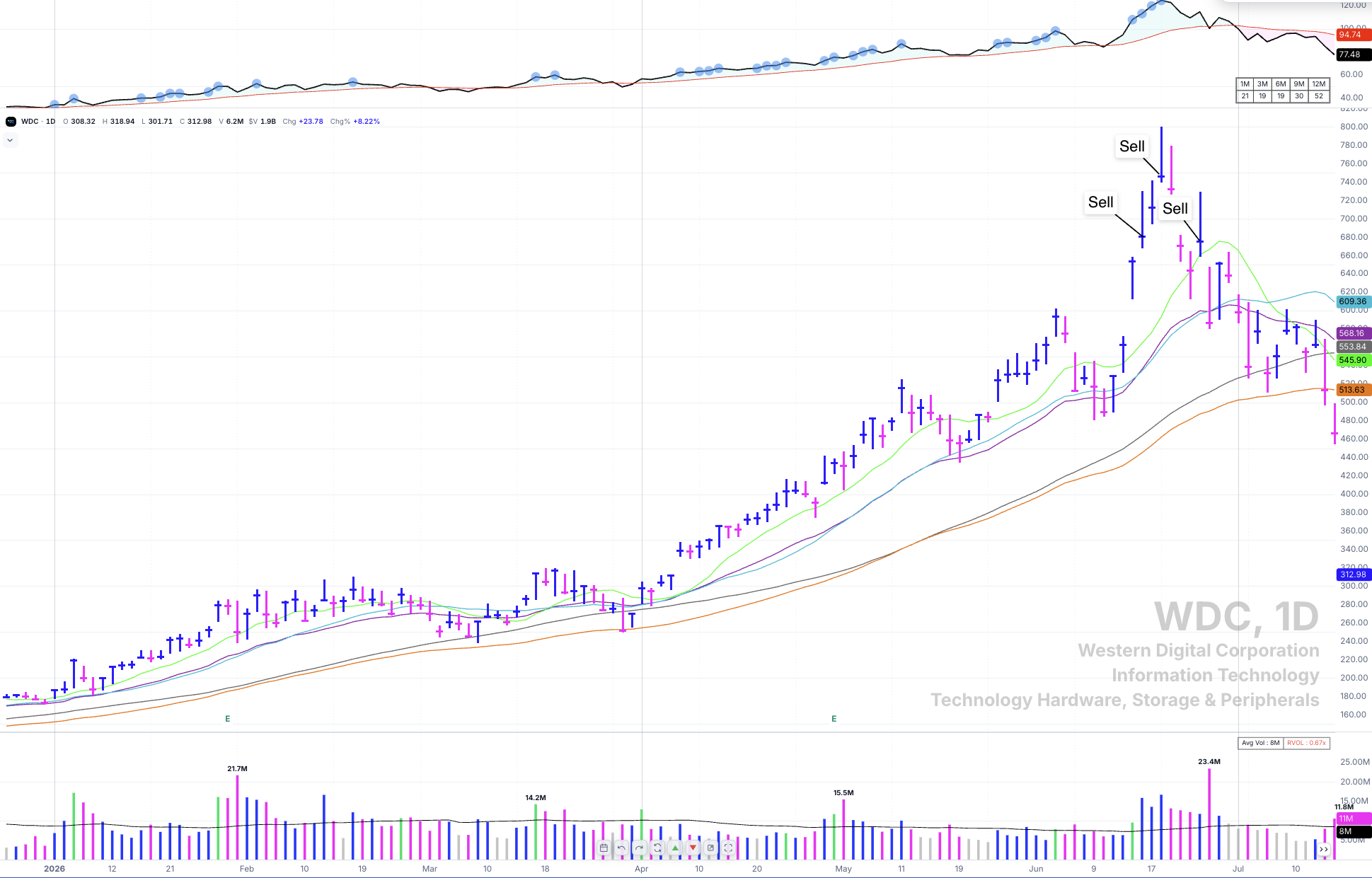
After a long run, one more gap. It was the top.
This one gapped multiple times (not on earnings news) after a long, extended run, far above its moving averages. It looked like the best news yet, and the last push. Within weeks, the gaps had filled.
Prepare for the Next Earnings Gap This Week
- Check the earnings dates for every stock you own. Deepvue shows them on the chart and in the screener.
- For each one, decide before the report: hold through it, reduce, or exit. If you don’t have a cushion, think hard about holding full size into the number.
- Write down where each stock is in its run: early out of a base, or extended after several bases.
- If one gaps up, mark the gap day low on the chart that night. That’s your line.
- Over the next few days, watch for a tight area above the gap. That’s where an add comes from, not the gap day itself.
You don’t have to get the gap day perfect. If you’re not sure, holding what you have and letting the next few days show you is a fine decision.
The TML Report
Twice a week, I publish where I think we stand: the market overview, the four index charts, and a focus list with the lines already drawn on them. When a name on the list gaps on earnings, you’ll see how I’m reading it.