Trading Through a Drawdown: What I Change

Ross
Ross is a co-founder of TraderLion and Deepvue. He was mentored by William O’Neil, and co-authored The Model Book of Greatest Stock Market Winners at WON + Co.
Published: November 18, 2026


 Ross Haber
Every new post, straight to your inbox
If this was useful, the next one will land in your inbox the day I write it.
How Should You Trade Through a Drawdown?
Every trader goes through drawdowns. The market corrects, setups fail, or you start making mistakes you know better than to make. The losses themselves rarely do the real damage. The damage comes from what traders do next.
The two natural reactions are both wrong. One is to throw out the rules because “they stopped working.” The other is to size up and try to make it all back in one trade. I’ve watched both wreck good traders. The answer is less exciting: keep the rules, shrink everything else, and let the market prove it’s ready before you do.
Why a Trading Drawdown Matters
The math is not symmetrical. Lose 7%, and you need 7.5% to get back. Lose 30%, and you need 43%. Lose 50%, and you need 100%. The deeper the hole, the harder every percent is to earn back, which is exactly why traders get tempted to swing bigger when they’re down.
Bill O’Neil built his whole approach around keeping losses small, because he knew a small loss is easy to recover from and a big one can end a career. A drawdown is where that discipline gets tested. When you’re winning, following risk management rules is easy. When you’re losing, every rule feels like it’s holding you back.
What I Change and What I Don’t
What I change
- Position size. The first thing I cut. Smaller positions mean smaller losses while I figure out what’s going wrong, and they take the pressure off each trade.
- Number of positions. Fewer names, so I can watch each one closely.
- Pace. I take fewer trades. Sometimes the best trade is no trade, especially when the market is the reason I’m losing.
- Standards. Only the best setups in the strongest stocks. In a drawdown, I don’t take the B setups I might take when everything is working.
What I don’t change
- My stops. If anything, a drawdown is when I respect them most.
- My sell rules, like the second consecutive close below the 21-day SMA.
- My setups. A launchpad or a consolidation pivot doesn’t stop being valid because I’ve had a few losses.
- My process. The weekend routine keeps running because it tells me when conditions improve.
Earning my way back
I don’t go back to full size because I feel ready. I go back because the market and my trades show me I’m ready. A few small wins at reduced size, in a market that’s acting better, earn the next step up. Then I increase size gradually, not all at once.
What it looks like when it fails
Drawdowns turn into disasters in a few predictable ways. Sizing up to make it back in one trade. Moving stops because “it has to come back.” Switching to a new system after a few losses, so you never find out whether the old one was the problem. And revenge trading: taking setups you’d never take on a good day because you need a win. Each one turns a manageable drawdown into a deep one.
Three Kinds of Drawdowns
Not every drawdown has the same cause, and the fix depends on which one you’re in.
The market is the problem
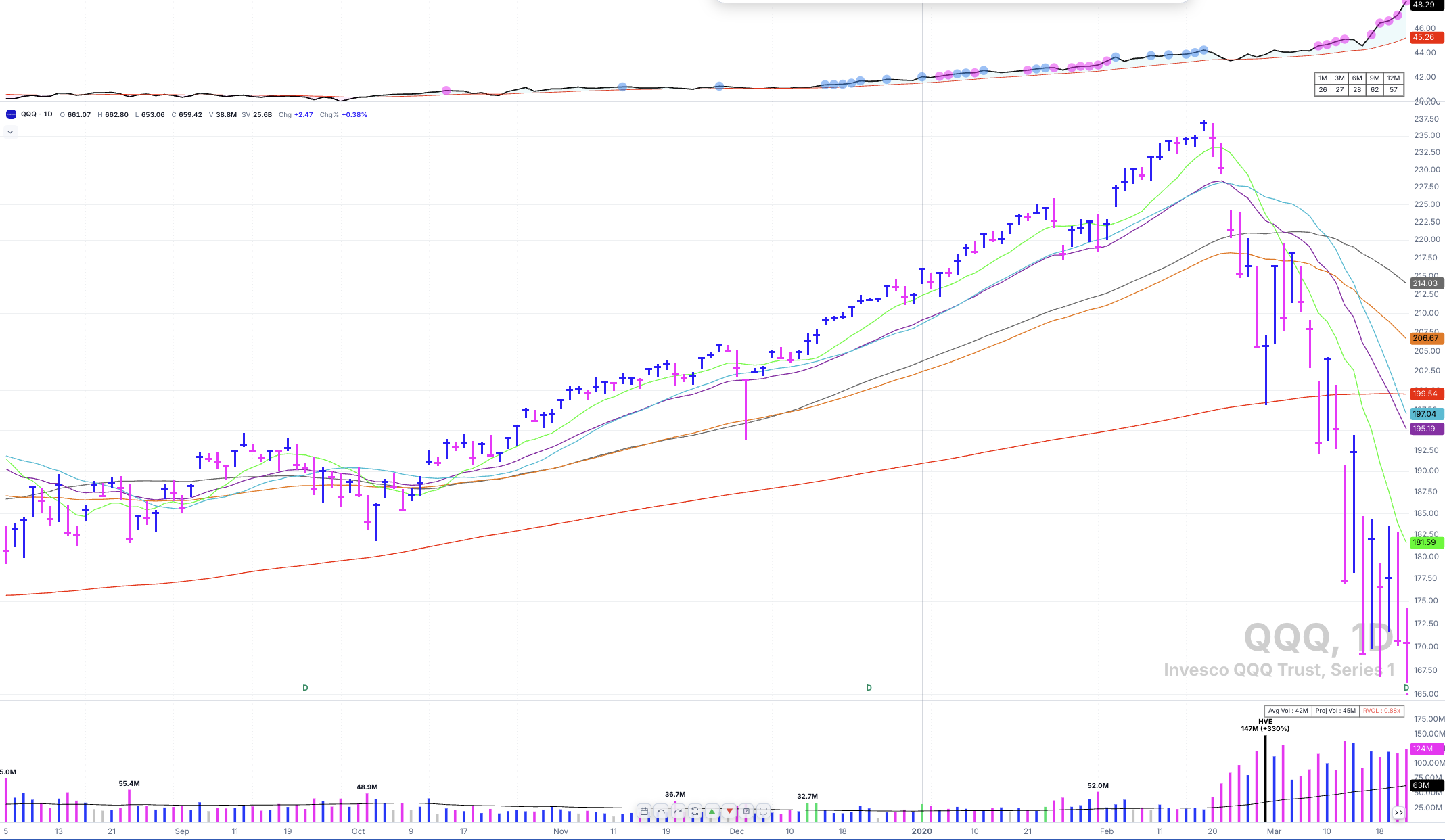
The index broke down. No setup was going to work in that tape.
The market goes into a correction and good setups fail one after another. The watch list starts drying up before the index breaks. Here, the fix isn’t in your trading. It’s in your exposure. Cut back hard and wait for a follow-through day and leaders setting up again.
I am the problem
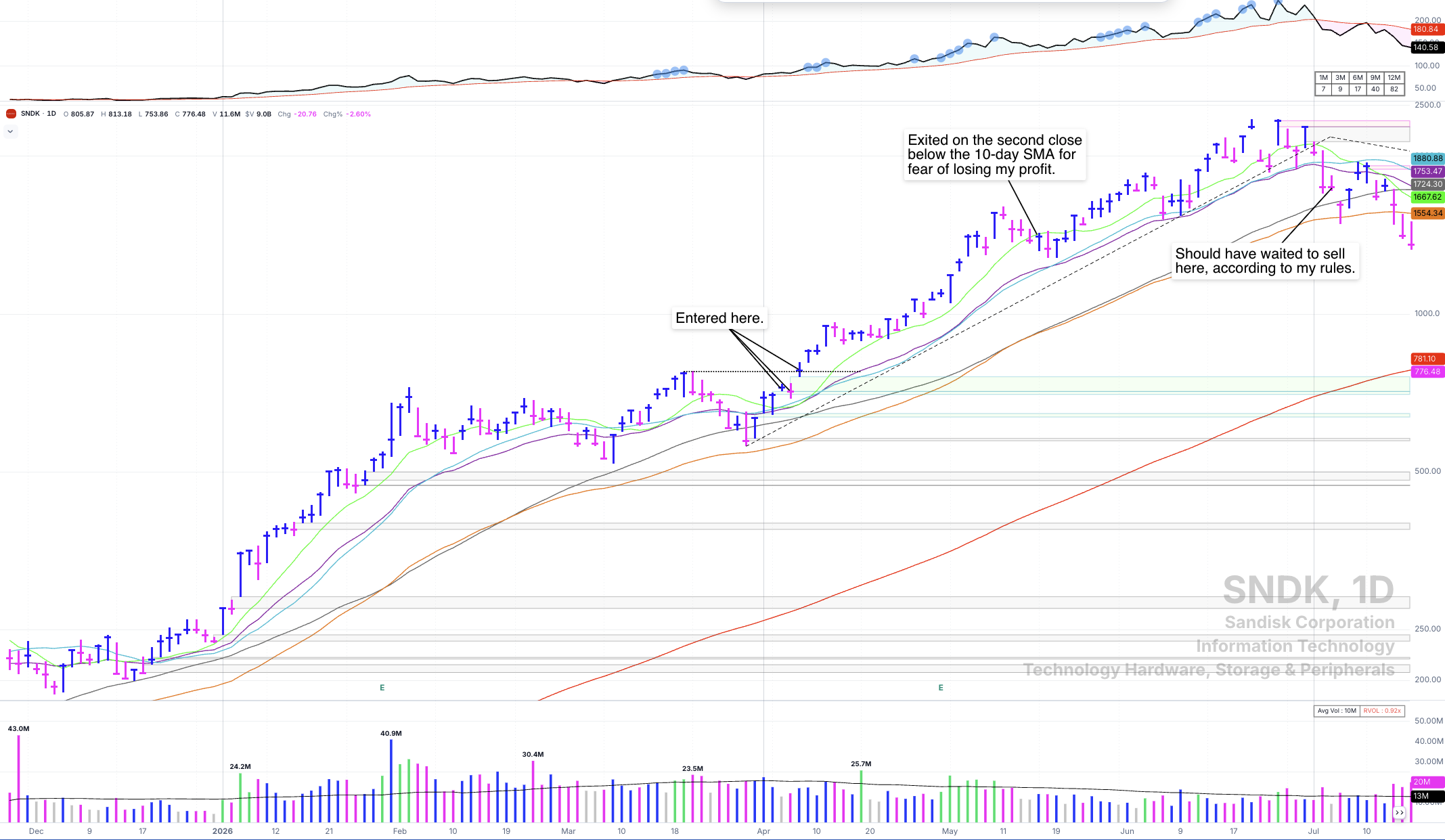
The stock was fine. My emotions won, and I exited too early.
Sometimes the market is fine, the stock is fine, and the problem is me. SanDisk was a good example. My rule is to sell on the second consecutive close below the 21-day SMA. Instead, I sold on the second close below the 10-day, because my emotions got the better of me that day. The 21-day was still a bit over 14% below where I sold, so my rule was nowhere near triggering. I figured I’d just buy it back. I never did, and the stock kept going.
That’s what this kind of drawdown looks like. The market isn’t the problem, and neither is the stock. It’s the trader breaking their own rules: selling early, buying extended, sizing up, moving stops. This is where post-trade analysis earns its keep. Find the repeated mistake and fix that one thing.
The market is choppy
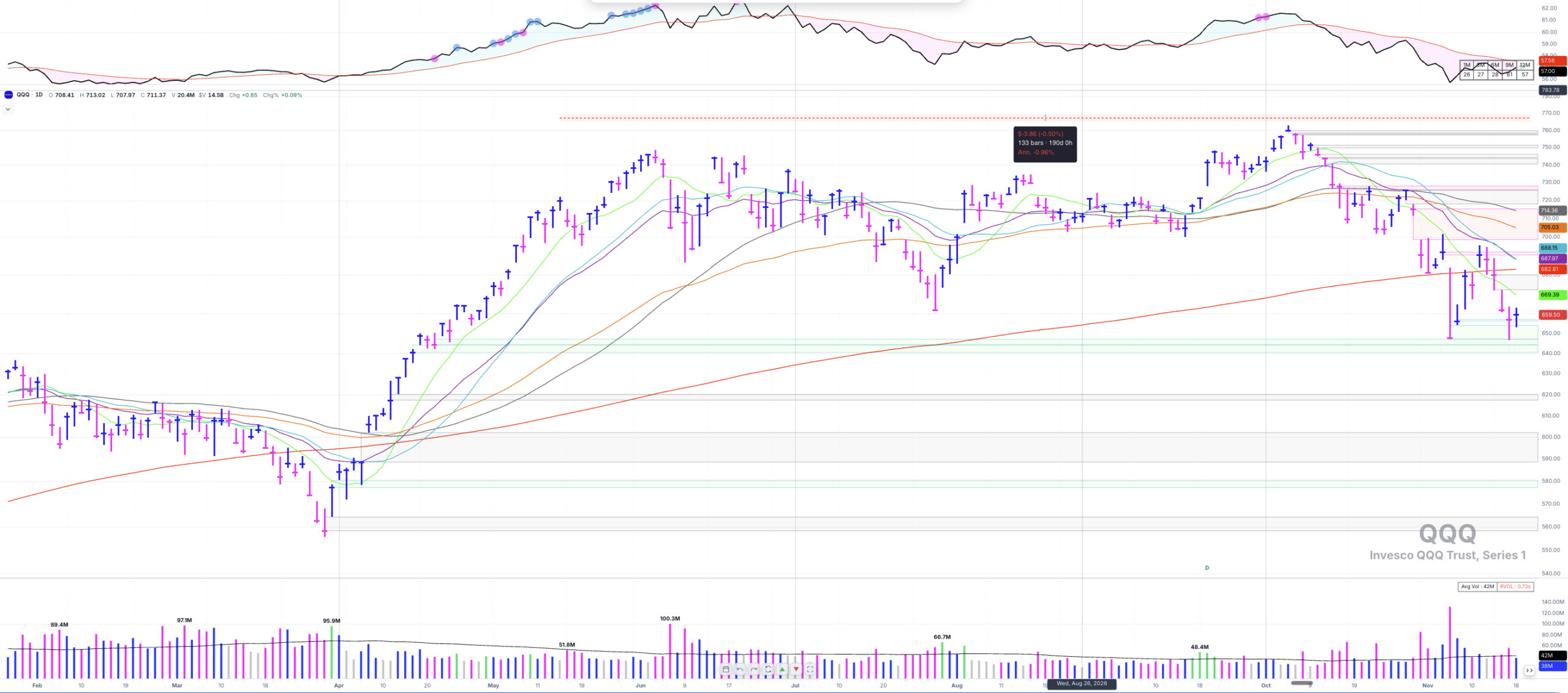
Up, down, sideways. Breakouts failed in both directions.
The hardest one. The index isn’t in a clear correction, but it isn’t trending either. Breakouts work for a day and fail. Each loss is small, but they pile up. Here, smaller size and fewer trades matter most, because the losses come from activity, not from one bad decision.
How to Recover From a Drawdown This Week
- Write down which kind of drawdown you’re in: the market, your execution, or chop.
- Cut your position size now, before the next trade, not after the next loss.
- Review your last ten trades. Look for one repeated mistake.
- Raise your standards. Only the best setups in the strongest stocks, in a market that’s cooperating.
- Write down what has to happen before you increase size again, and stick to it.
It’s OK to step back completely for a while. Cash is a position. The market will still be there when conditions improve, and you’ll want your capital and your confidence intact when they do.
The TML Report
Twice a week, I publish where I think we stand: the market overview, the four index charts, and a focus list with the lines already drawn on them. When the market is the problem, that’s where I say so.