
How to Trade a Market Rally (From a Correction)

Richard Moglen
Stock Trader & Student of the Markets. I help traders improve their systems & performance at TraderLion & Deepvue
March 1, 2025


How to Trade A Market Rally
In last week’s educational article we covered how to trade choppy markets. I highly recommend reviewing this as it covers the key adjustments to make when we are in a choppy/corrective environment.
How to Trade a Choppy Market
In this week’s article we will be focused on building a framework to trade a potential market rally after the market has corrected.
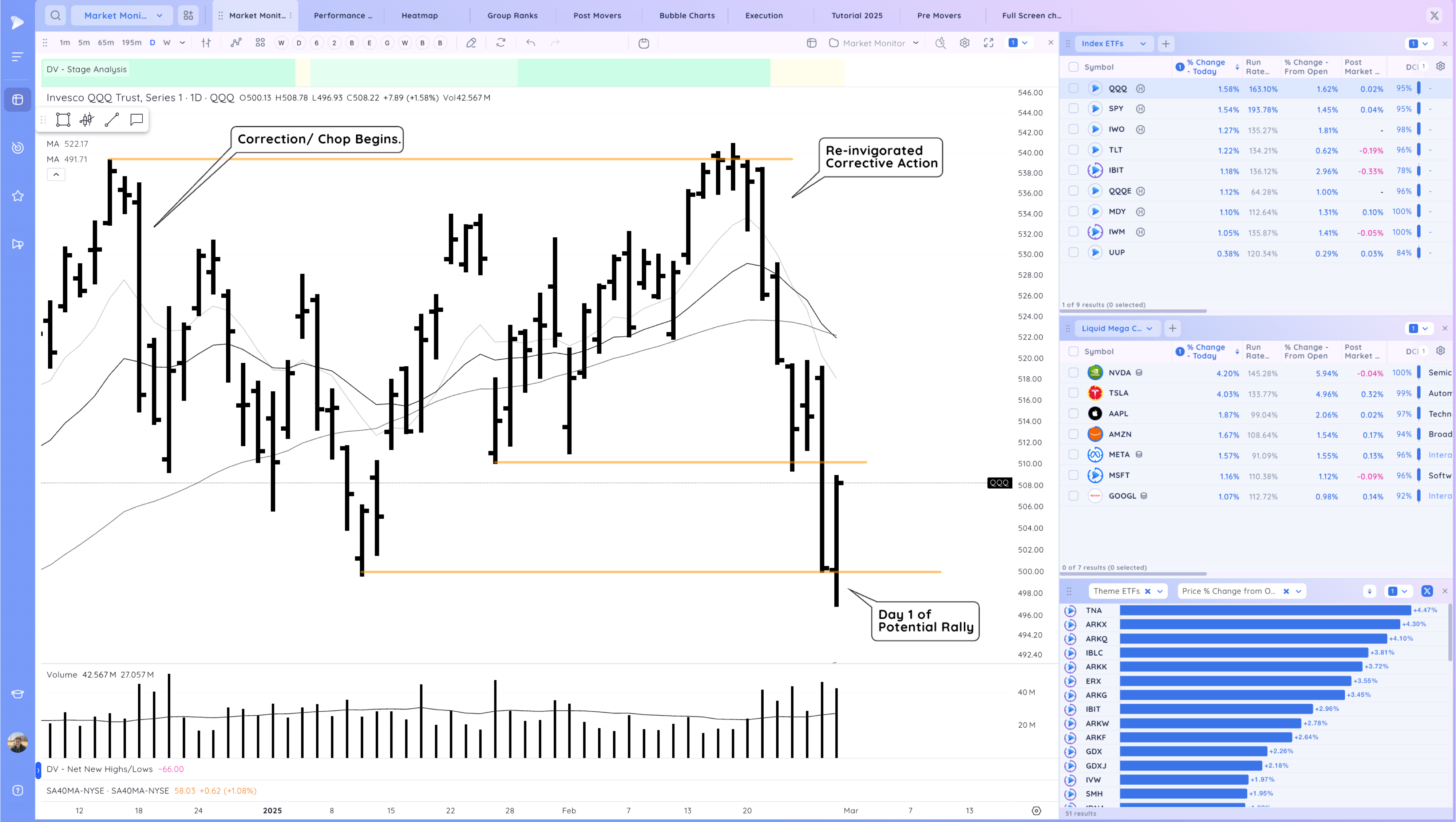
This is a timely article since this past Friday we had day 1 of a potential rally. Day 1 means there still is a lot to prove but we will lay out a full framework in this article about how to think about and manage rally attempts.
The key points we will hit on are:
- Considering the Larger Context
- Signs of a Strengthening Market
- Market Leadership
- Progressive Exposure
- Confirmation of an Uptrend
- Homework: Case Studies of Prior Bottoms
Considering the Larger Context
With every correction, when a potential market rally begins, you want to consider the full context of what is occurring. Some questions to consider are:
Where has the market come from? How long have we been in a longer term uptrend? This may impact how long a choppy period, correction may last
How severe has the correction been? The steeper the declines likelier the more time will be needed to work through it
Is the Fed Dovish or Hawkish? Changes in policy/actions can impact longer terms trends in the market and the ease of trading it.
Are there any other dominant geo-political changes impacting the market?
How far off 52 Week highs are we currently? Is this a correction in the context of a longer term uptrend or a more severe bear market?
What have been the driving forces and themes in the market? Did any factors change with these?
How long has this correction been? Does it seem like we are near the beginning or in the latter half?
Applying these questions to the current situation here are some of my thoughts:
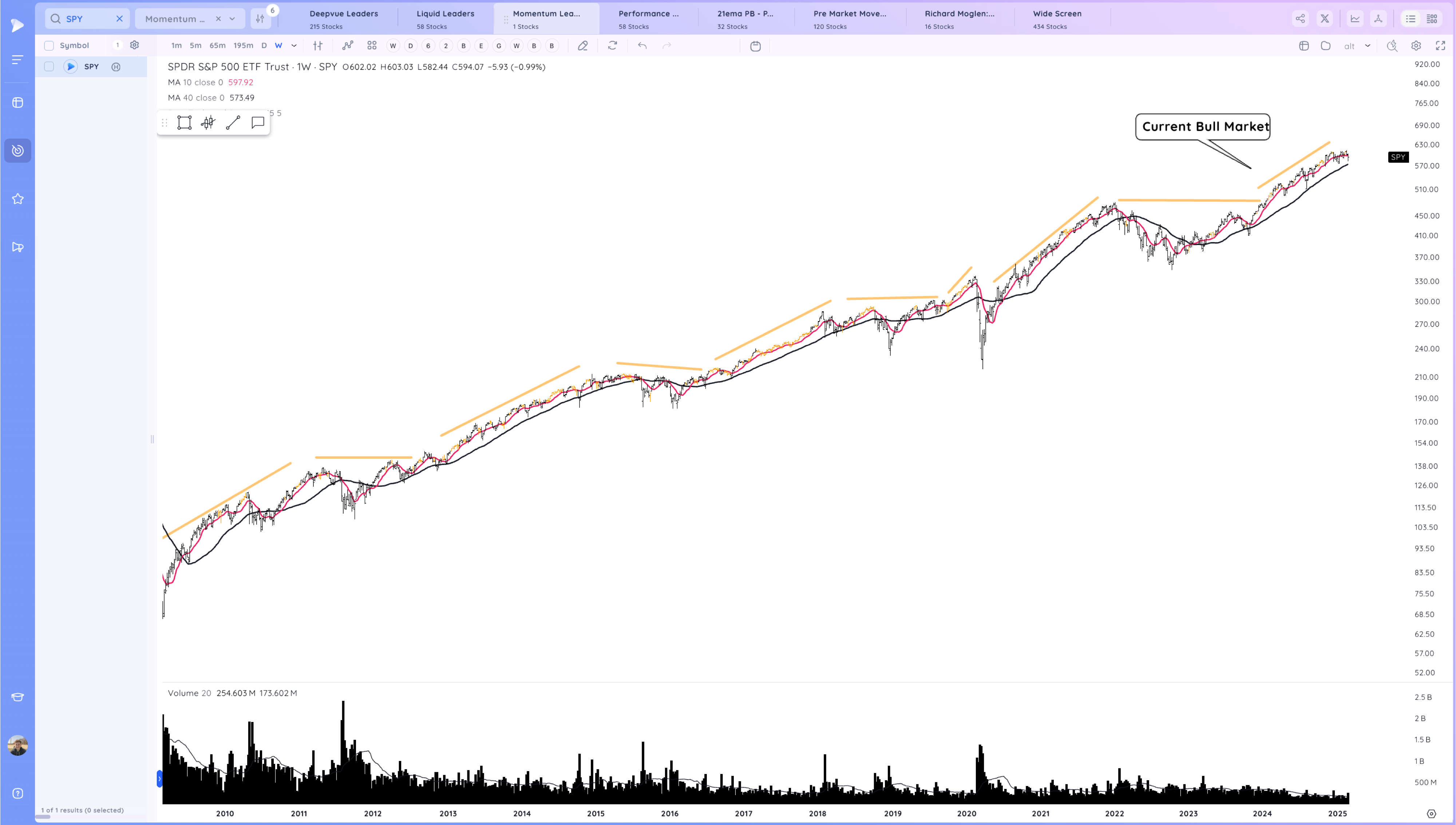
We’ve now been in a strong bull market since around Jan 2023 so we’ve been going for about 2 years. Just looking at the past 10 years this is about the norm before a longer basing period. (I’m not calling for this, just something I am aware of)
The current correction has not been that deep (although this week was pretty sharp), although growth stocks recently have been hit harder. The Spy at weeks lows was about 8% off highs. the QQQ similar, but the FFTY 19%. Currently this fits the bit for a more moderate correction/choppy period in the context of a longer term bull market.
By the way I do consider this recent action a correction. I know it does not meet the strict definition but in practice growth stocks have declined quite a bit.
The Fed had been dovish although on Dec 18 of last year when this chop/correction more started they did indicate that there would be fewer reductions ahead.
There are also other geo-political considerations most notably the change in administration and tariffs being widely used as a negotiating tool. Job cuts and just a bit more volatility. Feels like a headwind.
The driving forces in the market has been AI. This still feels strong although there does seem to be slowing in growth for semiconductors as things get more efficient.
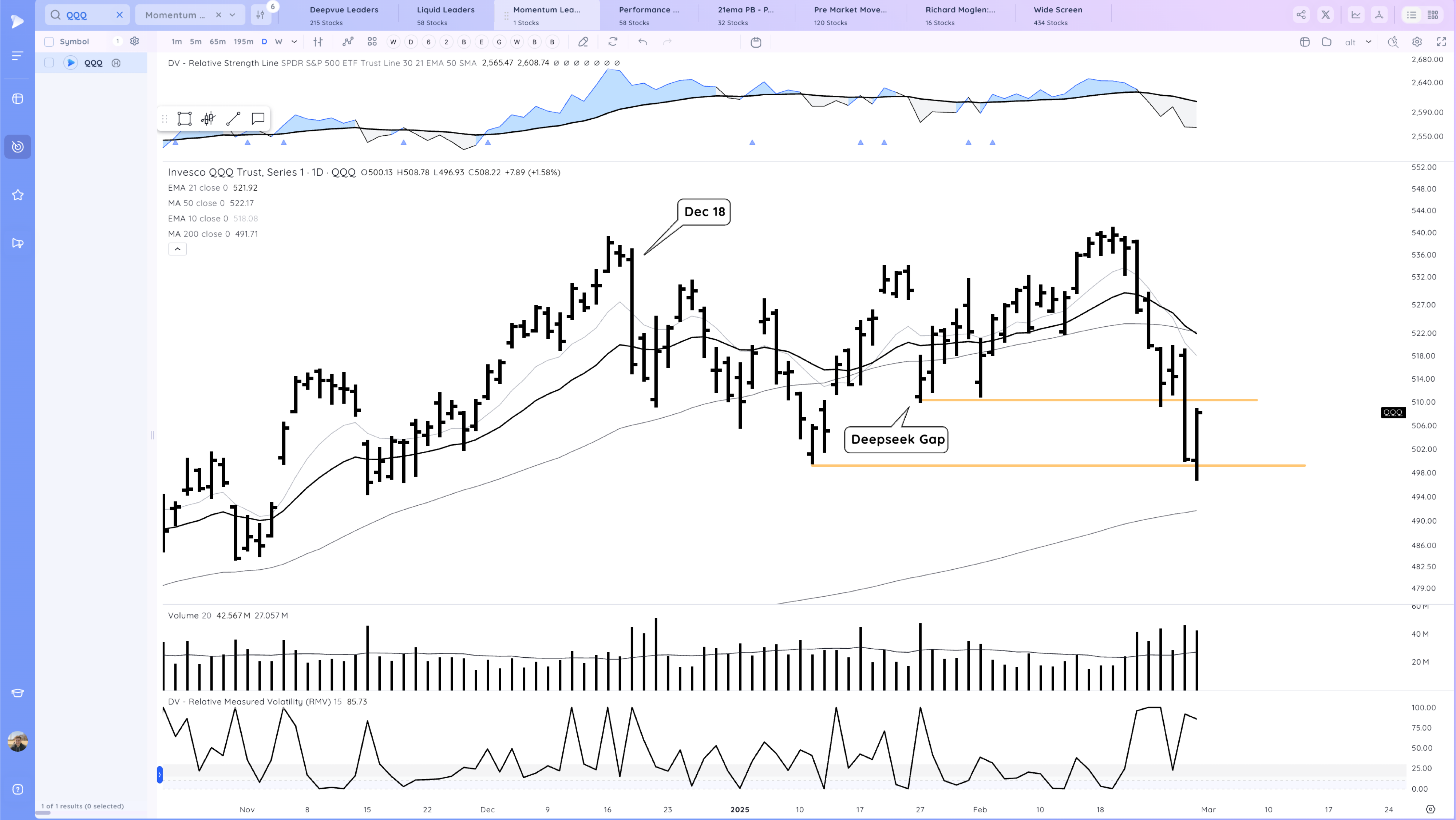
The current correction I think can be backdated to Dec 18. So it has been about 10 weeks. This would start to be the time where a right side could begin developing for a moderate correction in a bull market. However, we did see it seem to become a bit more severe last week until the Friday positive reversal.
Corrections also often have 3 waves to them. If you count the Deepseek gap down as the 2nd one this would have been the 3rd move down. It’s not super clear but things often aren’t in real time.
All in all I would say that this correction up to this point has felt like a normal moderate correction but the more hawkish fed and sharp drop last week do give me some reason that this could last longer.
However we have a valid rally attempt and have to respect that. You have to have a mindset shift and think optimistically until the rally fails and carefully look for signs and setups that could indicator this could be the beginning of the end of the uptrend.
It’s important to note that even if Friday was the low of the correction, it could take more time and choppiness, even several weeks, for things to really setup and get going.
Signs of a strengthening Market
Just like how in the Trading Choppy Markets article I listed some signs of a weakening market, here are some positives to look for:
- The Market Indexes Reclaiming and trending above their moving averages
- The Market Indexes forming higher lows
- Less gaps up and down
- Strong closes instead of weak closes (especially after gap downs)
- Growth stocks ignoring the weakness in the market and showing RS (such as forming higher lows when the market forms a lower one)
- New market leadership and themes developing and breaking out
- New Earnings Gaps seeing follow through
- The Market “ignoring” key news events that it previously sold off on, or even better acting positive after seemingly negative headlines
Market Leadership
Ross Haber has a saying “Watch the leaders, watch the leaders, watch the leaders”. Careful analysis of leaders, stocks showing RS, and developing leadership will tell you all you need to know about the health of the market.
You want to always keep a close eye on what the top ~15 or so growth stocks in the market are doing as well as the large liquid mega caps.
During a market you want to be on the hunt for new leaders and themes to stand out. There will be some overlap between cycles but there will be a gradual changing of the guard.
When considering a Market Rally you want to take an objective look at developing leadership. This gives you a qualitative view of the market health. Markets bottom when the top growth names start ignoring the market weakness, set up pivots or form higher lows below MAs, start breaking out, and in all other ways being their own uptrends.
The best stocks will lead the market in the cycle.
So in the first few days of a market rally, you want to assess the health of market leadership and growth stocks. Market rallies where leadership does not look ready yet are more failure prone.
That being said, it’s amazing how quickly stocks and charts can shape up so stay fluid and re-analyze each day during a rally attempt.
Defining a Market Rally
I define a market rally very similar to how the CANSLIM® methodology does it but I simplify it a bit more.
When a correction seems mature enough and looks to have put in a significant low I count from the first positive day after that low is put in.
Then each day that does not undercut the significant low is an additional day in the rally attempt.
Here is an example from last year:
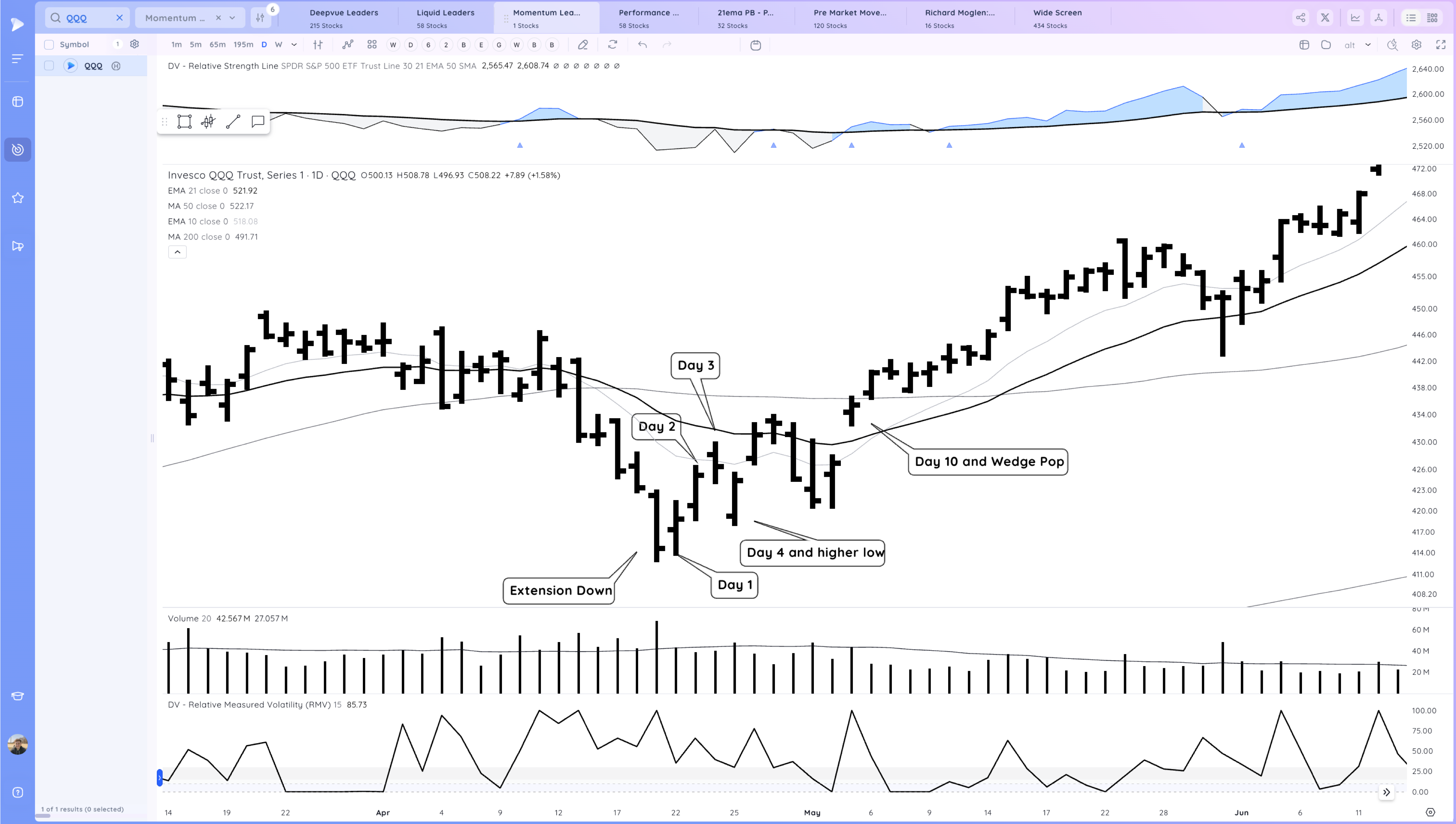
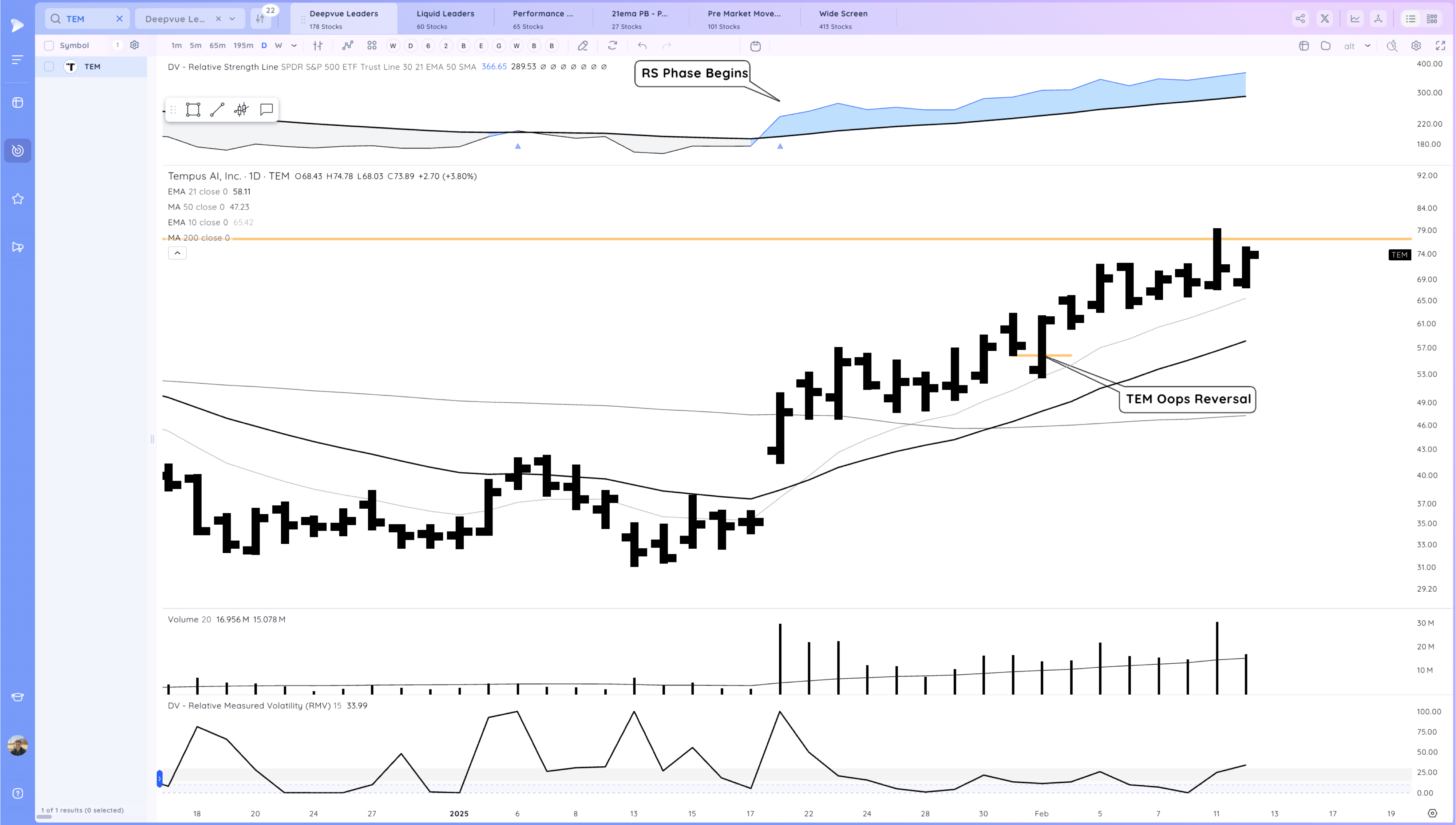
In this case the day after the extension down was the first positive day
After the rally attempt starts I’m really looking for a trade-able higher low, a pop above the 21ema, and very importantly trade-able leaders that are setting up and confirming strength.
I’m not so interested in a classic follow through day although that is always a positive.
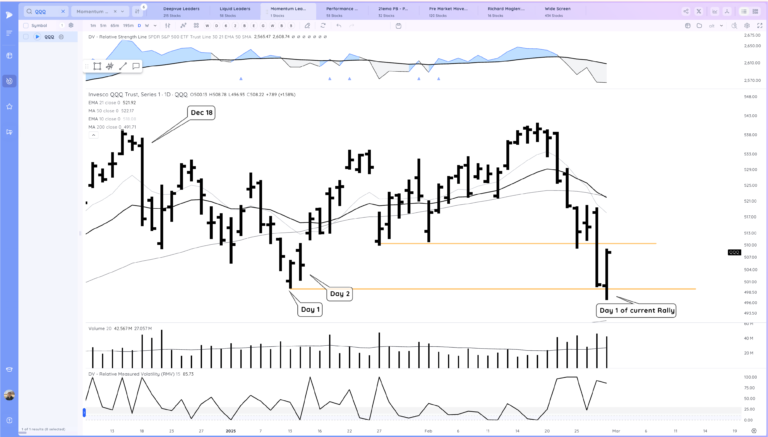
Looking at the current action we had the first day friday. Now we are watching for a higher low to form and continued constructive action. I’ve also labeled the first 2 days of the prior correction low/potential rally attempt.
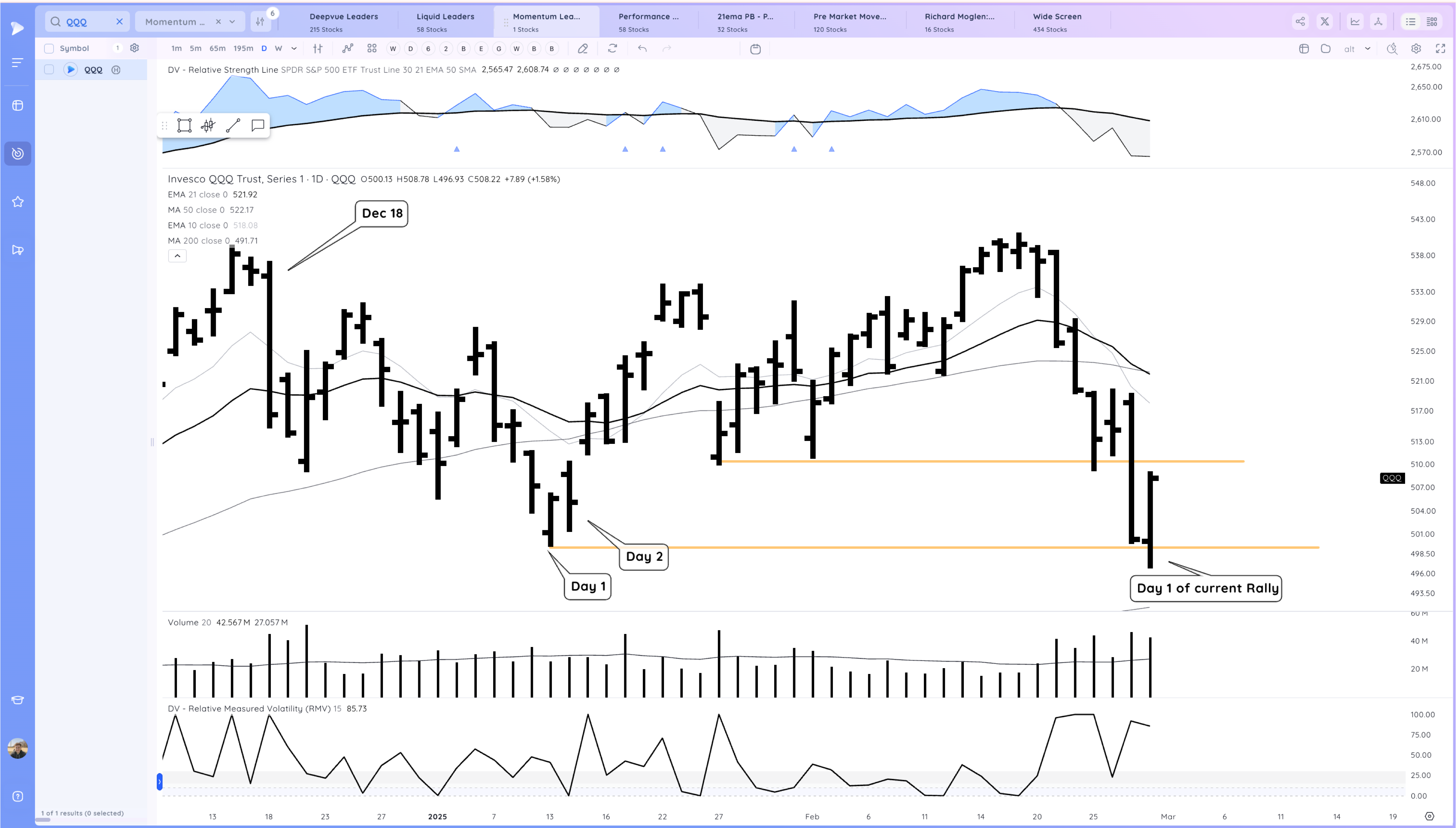
Each correction will end slightly differently, but keep and eye out for the signs of a strengthening market that I defined above.
Progressive Exposure
All right so now that we have defined what we are looking for how do you test the waters during a rally attempt and scale up to being invested after being in cash?
The key principle here is progressive exposure – using trade feedback as a sign to scale up or scale down
This is simple, but the actual implementation depends on the trader and there is an element of art to this.
Personally, I feel more comfortable trading strength, breakouts from more mature bases, but these are not always present during rallies and may develop later.
However, if there are trade-able spots, I will look to try 4 potentials leaders with 10% positions targeting a total portfolio risk of 2% of my account. This would mean I want to have less than 5% stops on these first attempts. I want to be placing these trades during a rally attempt just before or around when the market puts in a higher low/ reclaims the 21ema
If these trades work (at least around 3/4 in the money and advanced at least ~3%) I want to work to add to these initial positions at new spots and/or add new positions that are set up. If I am getting positive trade feedback I am comfortable adding up to 4 new positions at 15% again targeting 2-3% total added risk. I want to be aggressive if things are working and the market as a whole looks like it is confirming up because the natural lift in breadth will help new buys.
One thing I am considering after talking with a bunch of top traders is when A rally attempt just starts (so on Friday for example) I look to place a initial trade of about 15% – 20% of my account in TQQQ with a tight stop of about 3%. This is best put on if the rally attempt day one is a big upside reversal day or oops reversal day, trading against the day’s lows.
This would allow me to get exposure very early if the attempt confirms up and only risk about .05% of my account if it fails.
The benefit is that if we rally up this position would provide gains that can finance the risk of taking the starter positions in leaders that are then set up.
The drawback would be that even if I have a pretty good cushion on in an early rally attempt day, if we gap lower and undercut my stop I could take a larger loss than expected.
I have started implementing this and it is working for me so far, but you do have to pick your spots and be ready for potential Day 1s. Likely most traders especially if they work full time or are still earlier in their trading journeys should just focus on waiting for at least the first higher low.
A key question traders have regarding progressive exposure is do you have to see your initial positions to then use their profits to finance newer positions?
I personally do not, but I do track how much total profit I have since I started trying positions.
Waiting for Confirmation of a New Uptrend
What I described above is a more aggressive style to try to position very early in leaders just as the market cycle is beginning.
To be clear, it is perfectly sound to wait for more confirmation before testing trades. After the first higher low in the market leaders will often be setting up spots and breaking out for the next few weeks.
Waiting a bit longer also gives you the luxury of having more information about what the best themes and leaders are. Even if you miss their first thrust off lows or higher low in their base, their first pullback to their MAs after this is often a great entry point.
Here is a graphic I made of the November 2023 Correction Bottom noting the days where the leaders each got going. Note how even weeks from the bottom you had strong breakouts and opportunities
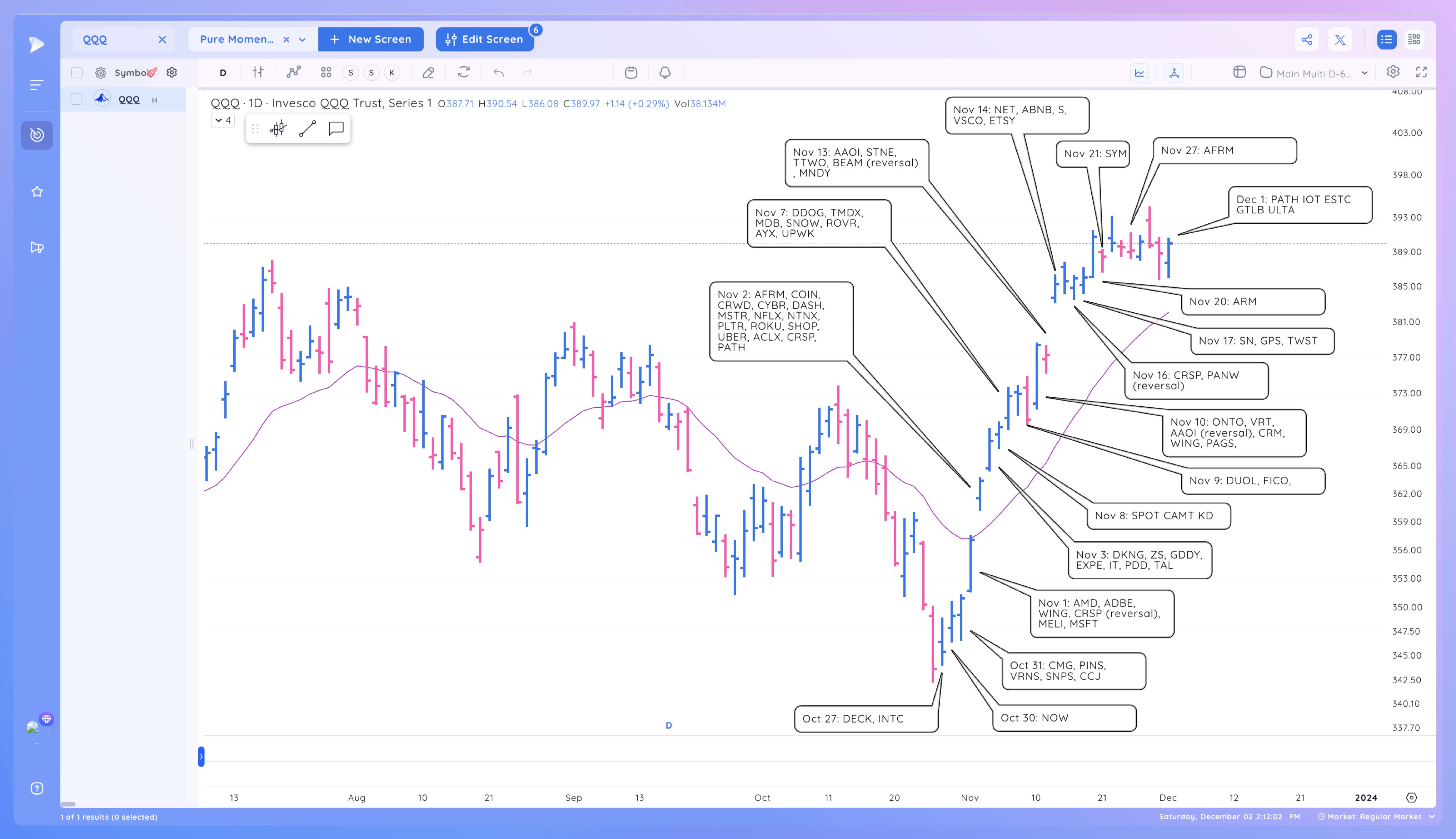
I did a full case study of this market bottom, noting the charts of leaders along with it. I would recommend checking it out here:
Key Points
1. Consider the Larger Context
Assess how long the market has been trending and the severity of the correction.
Understand macroeconomic factors like Fed policy and geopolitical changes.
Identify whether the correction is part of a longer-term bull market or a deeper bear phase.
2. Look for Signs of a Strengthening Market
Market indexes reclaim key moving averages and form higher lows.
Growth stocks show relative strength and new leadership emerges.
Market reactions to news become more positive instead of selling off.
3. Analyze Market Leadership
Strong leaders emerge early in a rally and begin breaking out.
The best stocks will ignore broader weakness and lead the next uptrend.
Weak or unclear leadership suggests a rally may be prone to failure.
4. Use Progressive Exposure
Gradually increase position sizes based on trade feedback.
Start with small test positions and scale up as trades confirm strength.
You can use ETFs like TQQQ early on for quick exposure with tight stops.
5. Wait for Confirmation if Needed
More conservative traders can wait for a higher low and clearer setups.
The best leaders will still offer buy opportunities even weeks after the bottom.
•Watching for follow-through days and pullbacks to moving averages can help with timing.
Comment Below
What was your key takeaway from this article? What would you add? What trading topics would you like me to write about in the future?
Comment below your thoughts!
Homework Assignment
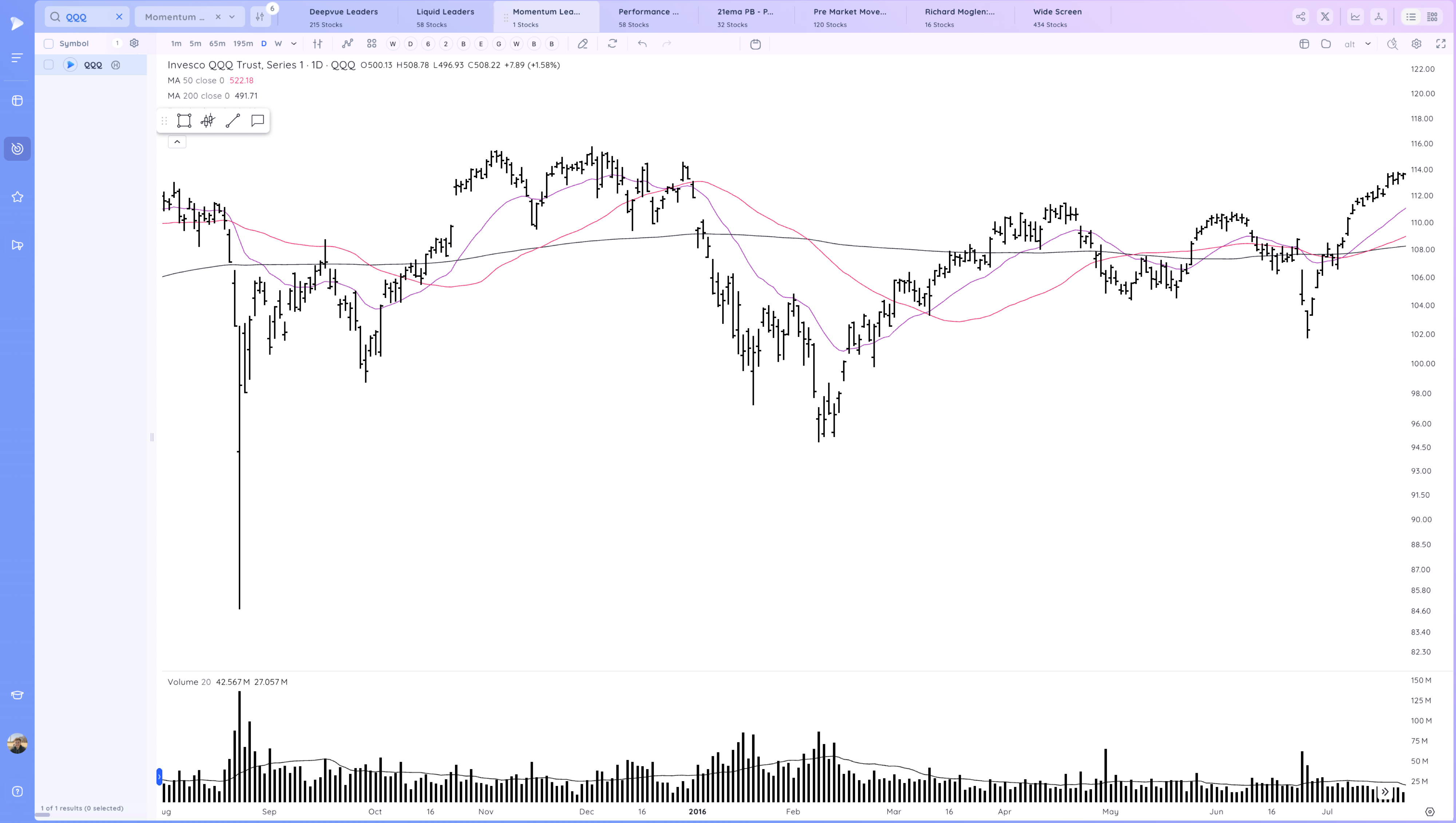
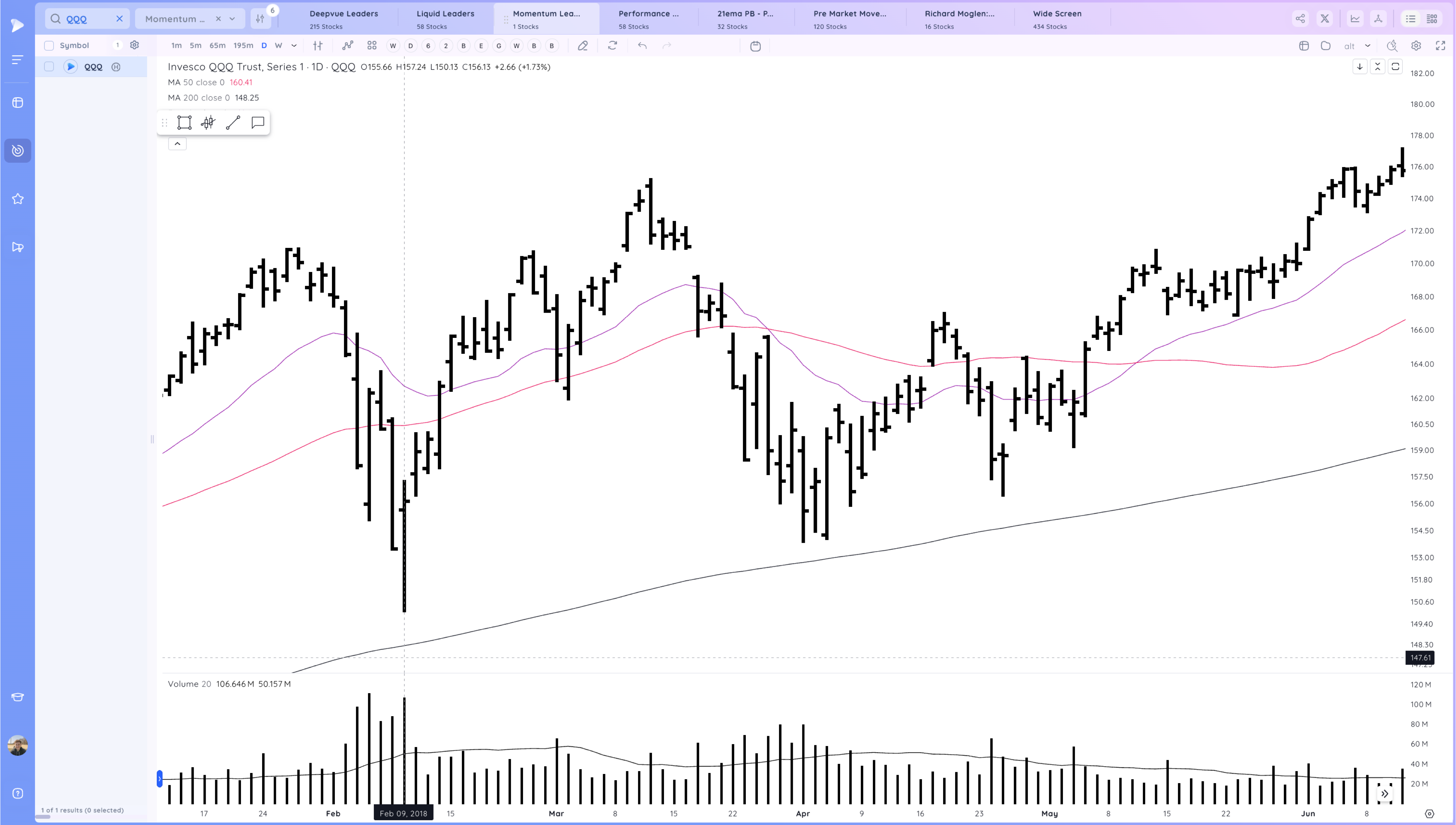
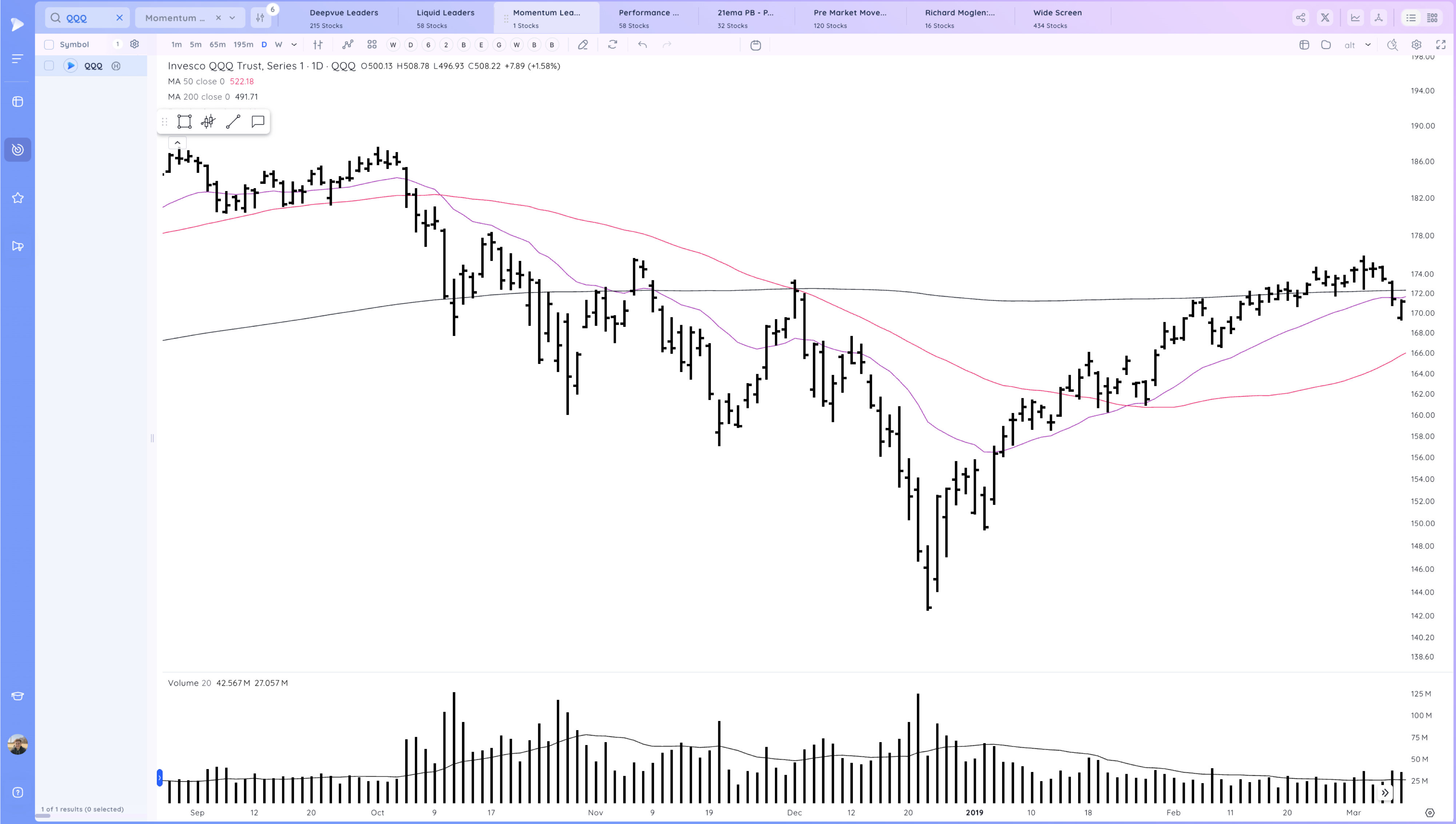
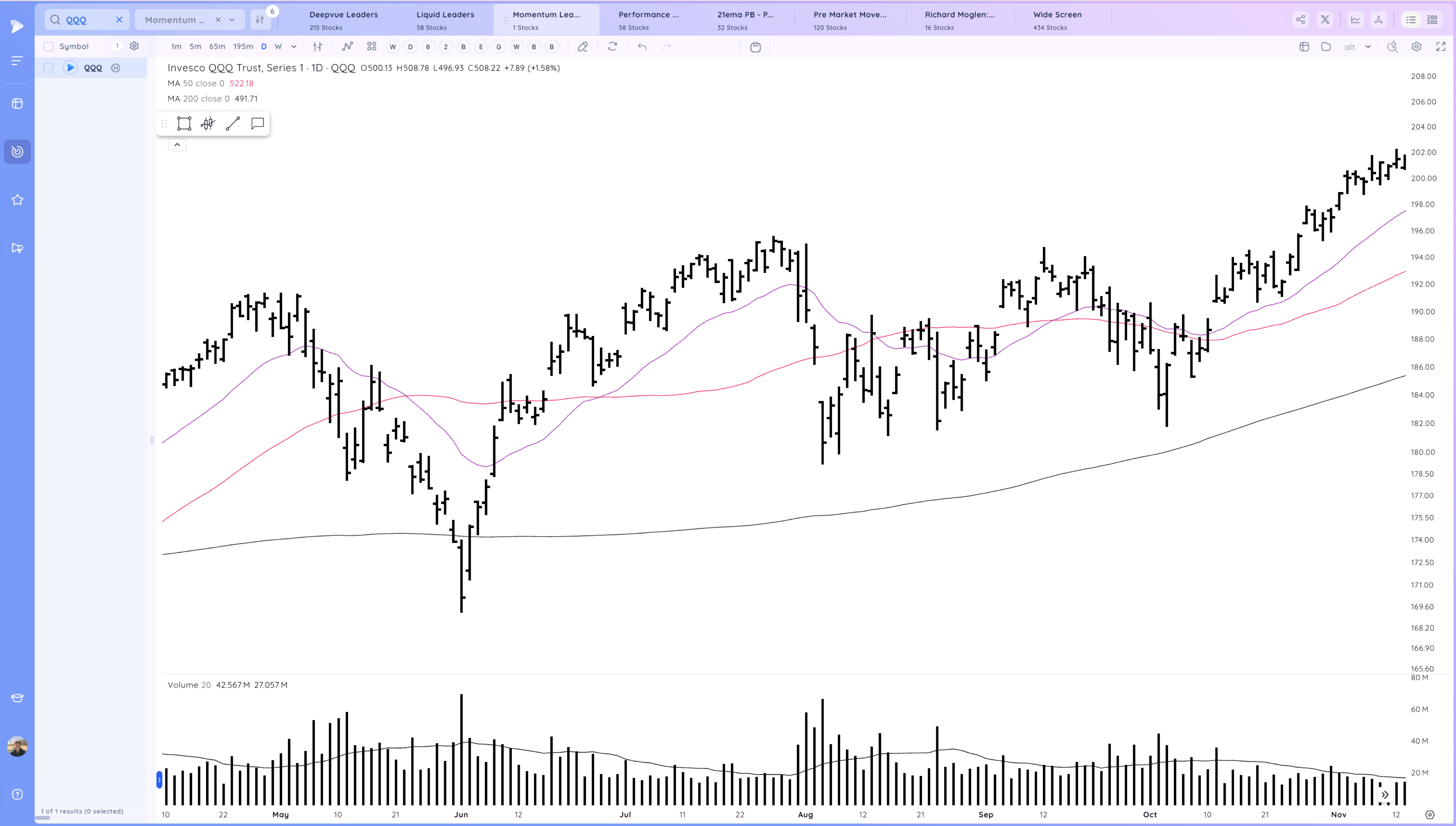
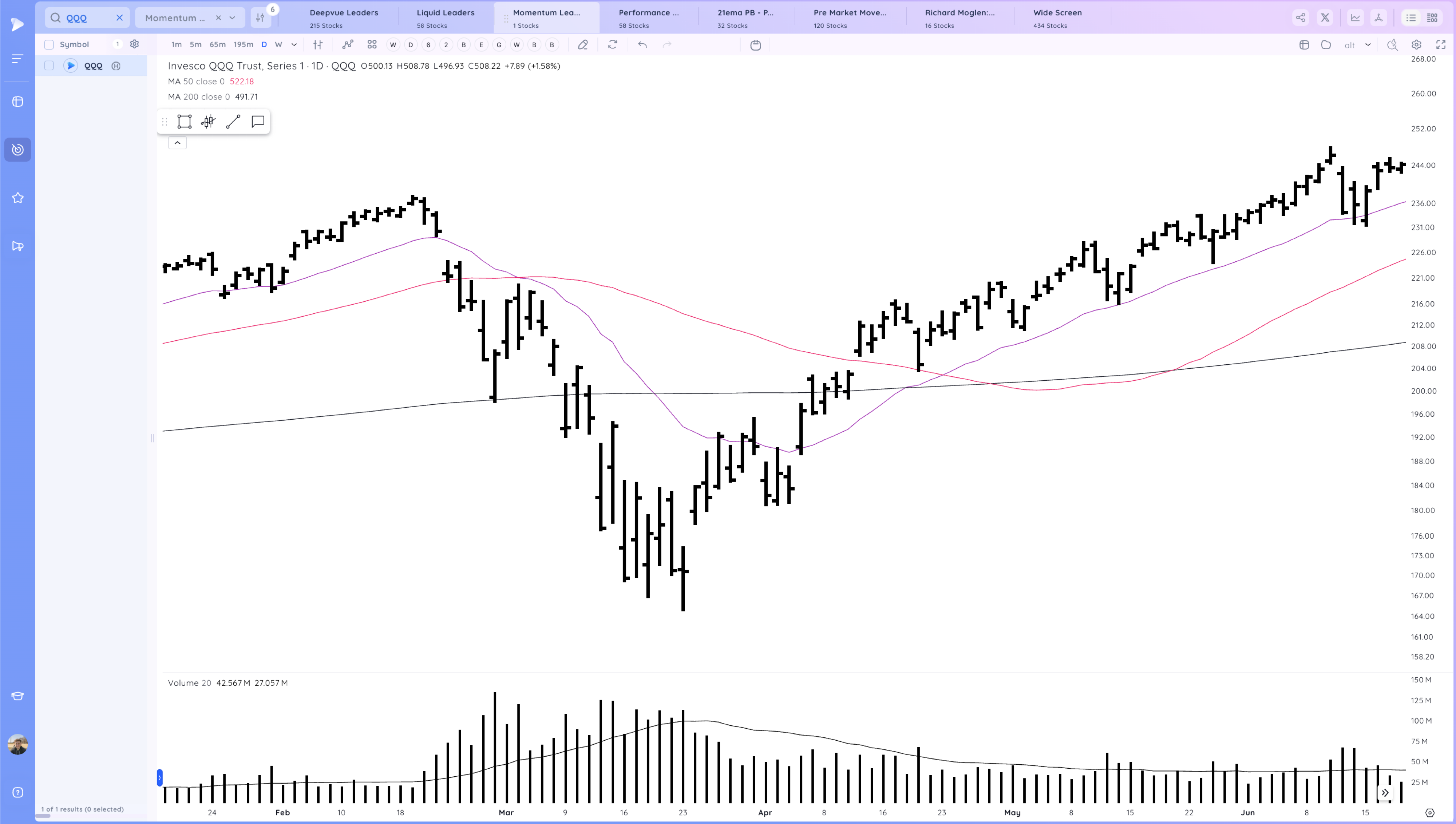
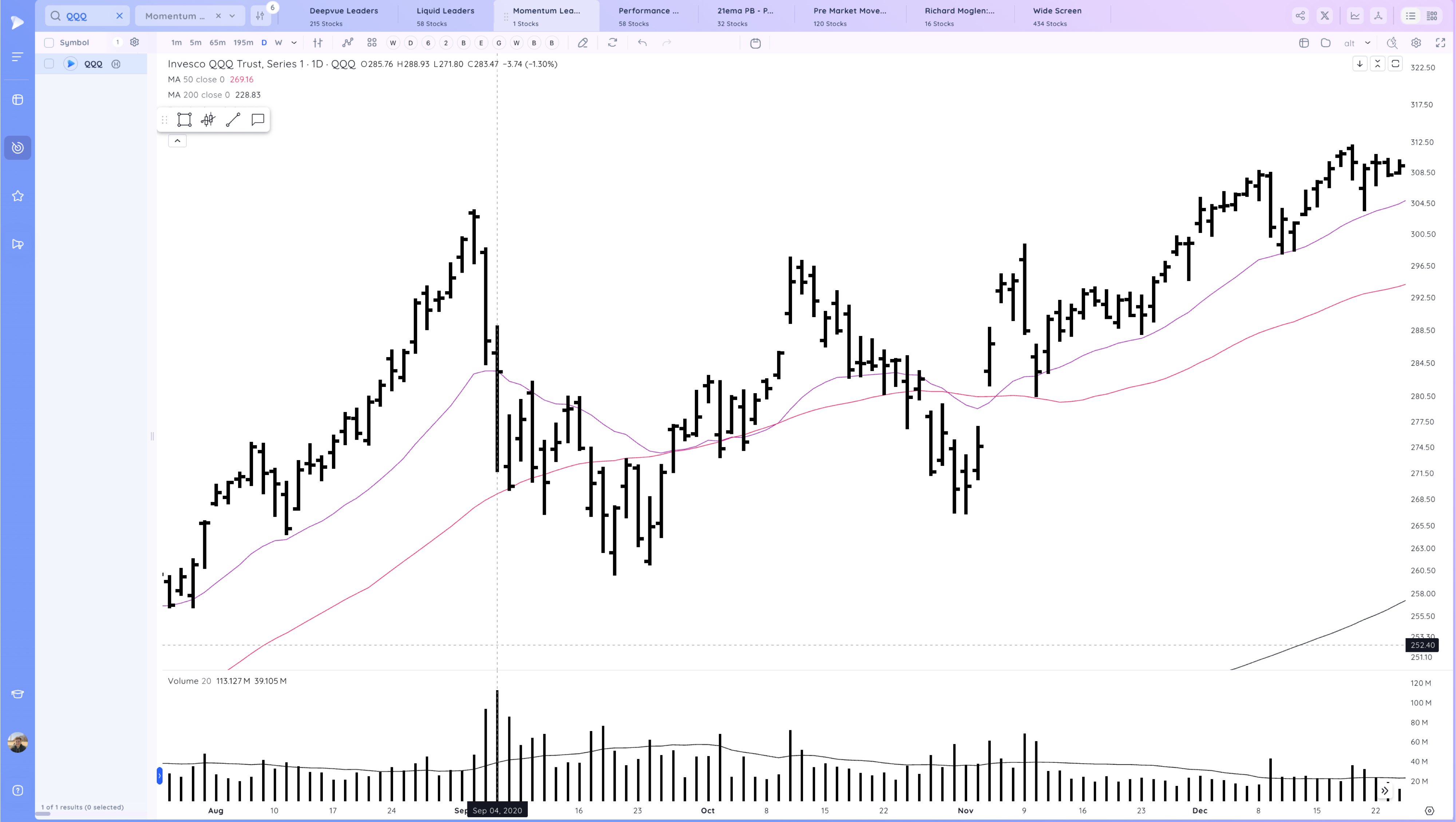
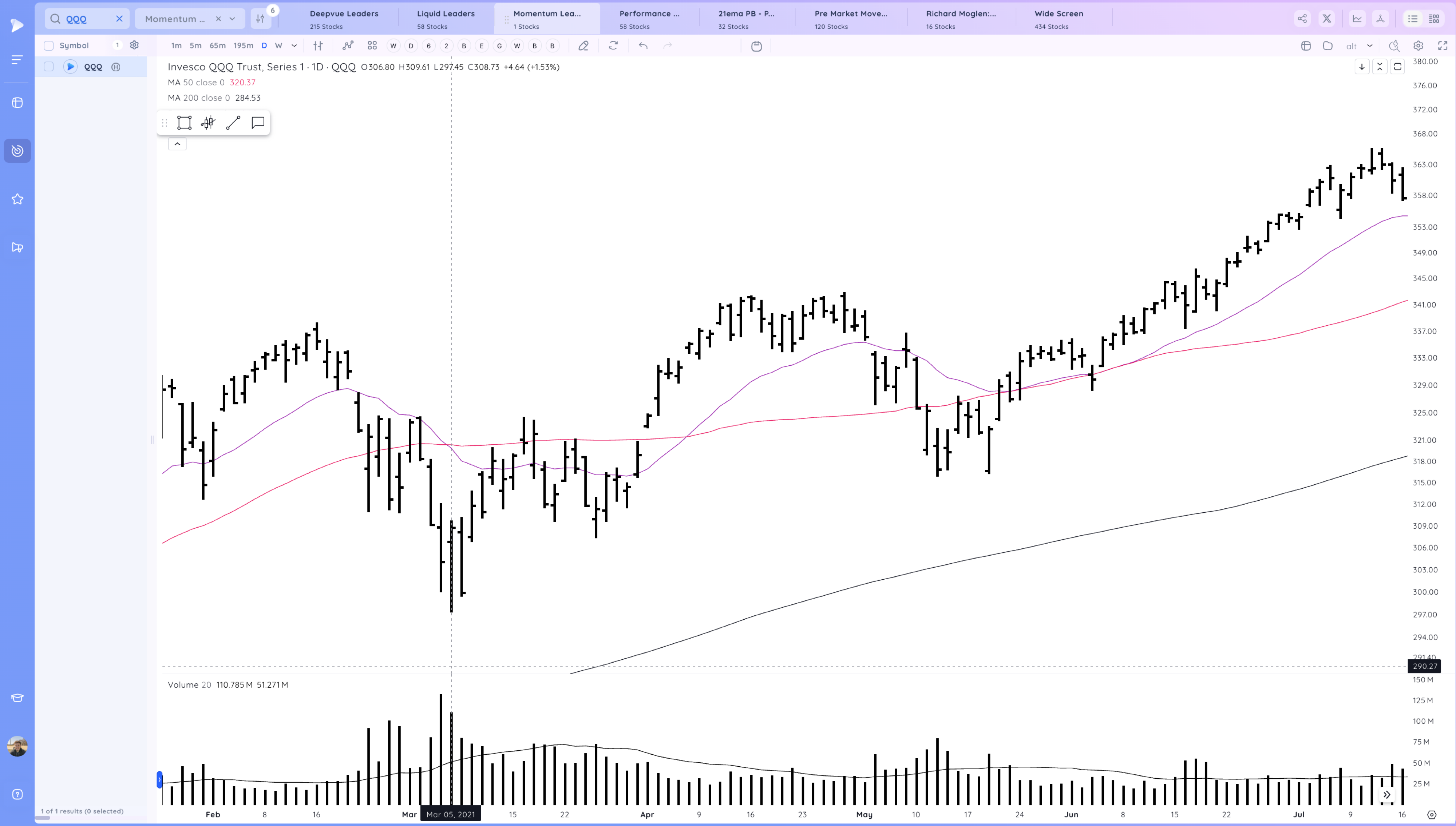
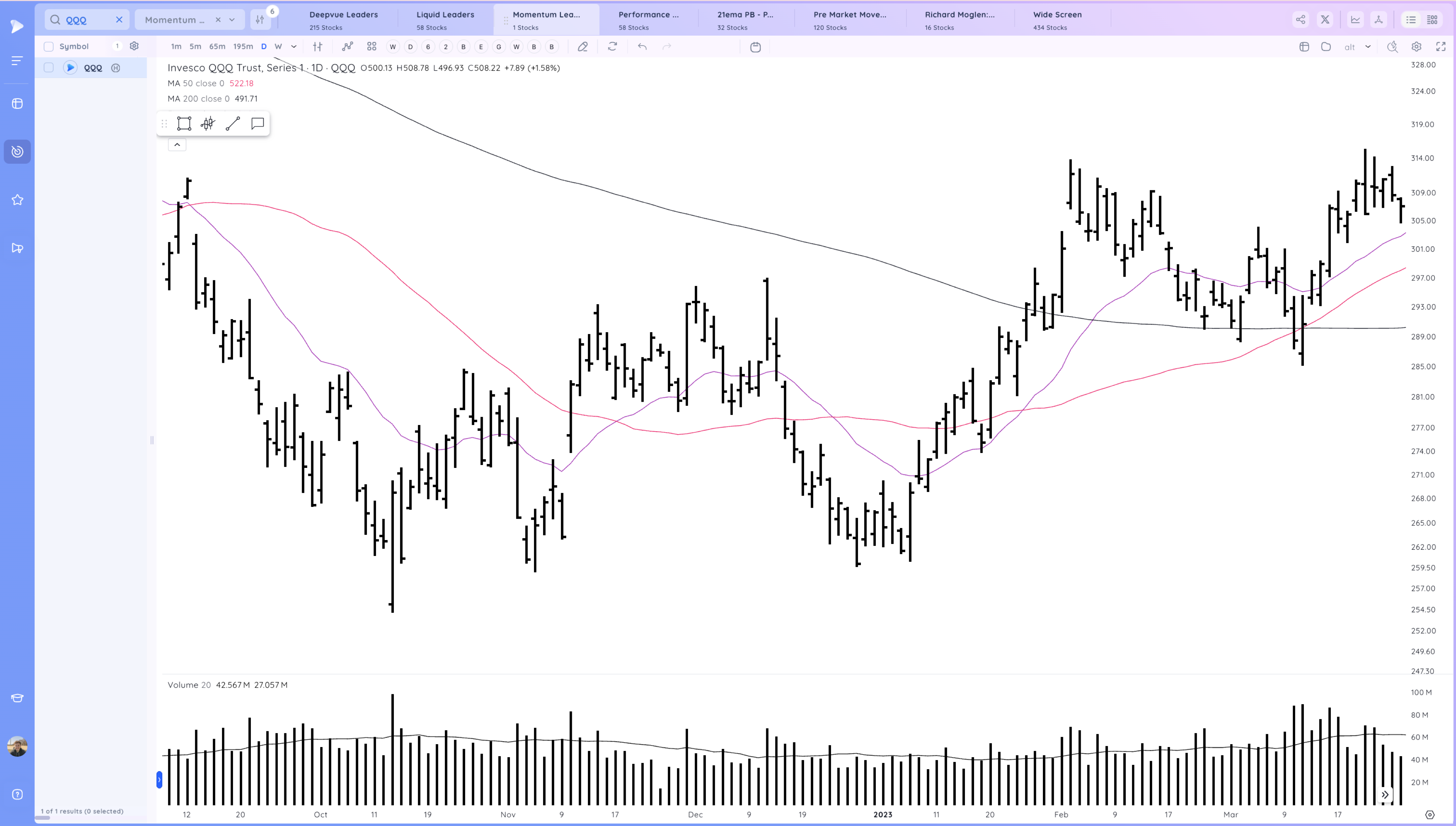
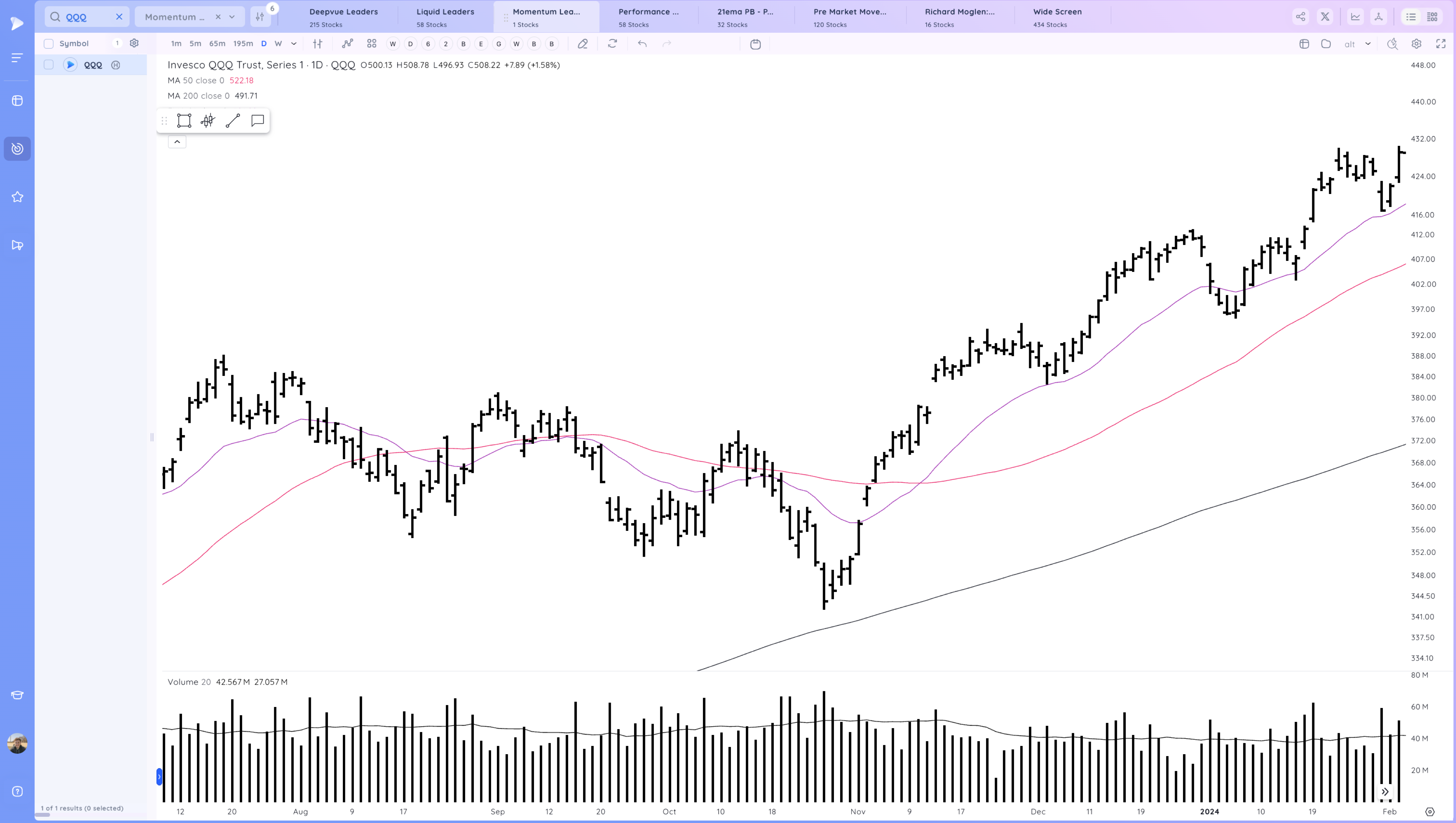
Study the below market cycles and market up for yourself where the extension down was, where did the rally start, and where you personally would be looking to start testing trades.
We also ahve a free model book of additional ones to review: https://traderlion.com/historical-corrections-and-bear-markets-model-book/
CAN SLIM® is a registered trademark of O’Neil Capital Management, Inc. (U.S. Reg. No. 3,081,940). TraderLion is not affiliated with, sponsored by, endorsed by, or licensed by O’Neil Capital Management, Inc., Investor’s Business Daily, MarketSurge, or their affiliates. Any reference to CAN SLIM® is for descriptive purposes only.