
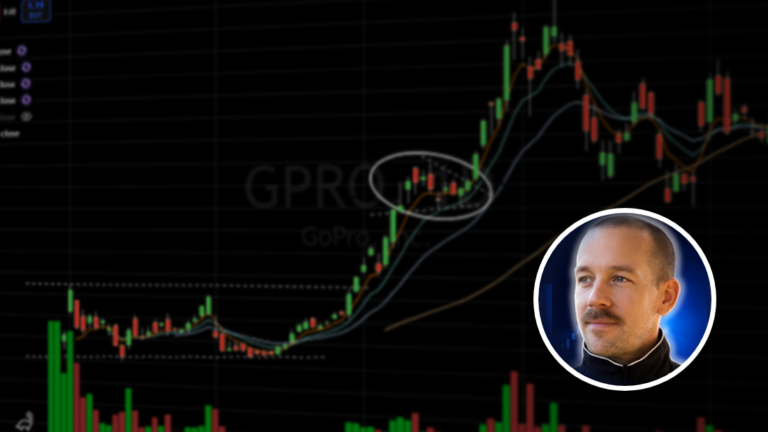
Shake Pryzby Answers 18 Trading Questions
Published: October 16, 2026


Shake Pryzby cut his teeth on a prop desk at T3, survived years of whipsaw markets by shrinking his time frame, and built a career on one idea: buy tight inflection points off support, as close to the stop as possible, then use size as an asset. TraderLion opened an AMA on X, and readers sent in their questions. Here are his answers to all 18, grouped by theme.
Answers are in Shake’s own words, lightly edited for typos and broken into paragraphs. Reader questions were lightly cleaned up.
Trading the Current Market
How difficult has 2026 been for you compared to previous years? Have you had to make any major adjustments to your trading?
I think it’s been extremely difficult! I wouldn’t say it’s the hardest year I’ve ever seen because we were blessed with such an insane two-month period to make money. Sometimes that’s all you get on easy mode in a year!
But I think the context of everything is what’s made it so difficult. When we have an April rip for ten straight weeks like we did, you would expect continuation at some point! So with this thought, the market keeps us active through the chop. THAT’S what’s made it so difficult: our expectations. The AI trade has become so crowded that the day-to-day action in these stocks leads to so many shakeouts with back and forth action.
The main adjustment I’ve made is that I am much quicker to take profit in this survival type market. There is still great opportunity out there, I just feel we have to lessen our expectations in terms of follow through right now.
Where does one draw the line between adapting to market conditions and deviating from your style?
I think it depends on your personal strategy. For me, I try to dynamically adjust my strategy to the underlying environment, but it’s still the same strategy. The thing that changes for me is my profit expectations and how I’m looking to scale out of trades. I’m always trying to buy or sell tight areas, just scaling out changes based on the market at hand. The entries though are still virtually the same. I think this question needs a bit more context relating to what ‘your style’ means!
How did you survive the real bear markets? I’m talking years of chop.
Shrinking my time frame down in a major way. Accepting it wasn’t a swing trader’s market and just making whatever adjustments I needed to in order to stay in the game. In application this was mostly buying extreme rinse outs in names shaking out support, completely selling into strength at 3-5R and not really caring if a name went higher. Lots of times this would be in the same day. I would rarely ever be long a stock more than two days. Lots of times it was buying support and selling opening strength the following day and, FOR REAL, not caring if the stock went higher. Easy to say, hard to do! Don’t know many other ways to survive those kinds of markets.
I don’t think I took a swing trade longer than three days after we broke below the 200-day that year. Survival mode at its apex. Your gains get wiped away so quickly in that sort of whipsaw environment, so you learn the only way you’re going to keep the equity curve moving higher is just to take wins when they appear and live to see tomorrow.
Setups & Entries
What is the technical pattern you like trading the most, and why?
It’s not so much a technical pattern as much as seeing compression in a high octane name. It can come in all different forms but the best are usually lower highs and higher lows in a leading stock. I don’t trade mean reversions, for example parabolic tops, because I can’t see the buyers and sellers that well. I had to learn that the hard way years ago. Much of life is figuring out what doesn’t work for you!
When things are so tight they HAVE to expand at some point soon, that is my version of a fat pitch. When we stack other layers of probability like weekly chart strength, maybe a technical pattern, sector strength, earnings growth and other things telling you to get long as hell… that’s when you load the boat with a tight stop!
I am constantly focused on “make or break spots,” meaning the stock either holds up RIGHT HERE IN THIS AREA, or it breaks down and will need weeks to recover. That’s where I want the focus to be. Inflection points are the only reason I have a career.
What is your entry method?
Somehow, someway, buying off support. 30-minute pivots à la @1ChartMaster have been killing it, especially in this chop. VWAP reclaims are another thing that’s worked really well. I am always looking to buy as physically close to the stop that says the trade is wrong as possible, because when right it leads to the outsized risk/reward gains and pays for all the losses.
With earnings season coming up, what are your best tips for trading power earnings gaps? You touched on it in your latest TraderLion interview, but I’d love more on entry tactics during earnings season.
Earnings season is absolute grind time. It’s important to do research every night… it’s important to double that research during earnings season. You need to be looking at earnings reactions every single night and the market begins to speak to you. Put all the best reactions on an earnings season watchlist and scroll it every night. Then scroll it every day during trading hours as well. Study not only individual names making big moves, but multiple names within the same sectors making the big moves. THAT’S where the alpha is.
As far as entries go, I’m always looking for tight entries and ideally when the stock is shaking out weak buyers. A 20 EMA push through and reclaim has been big for me, for example. Or shaking out the earnings day low and reclaiming.
The more important thing is to set the standard of going through earnings every single night, every single quarter, and you just begin to look at the market so differently than the crowd. You are able to see which stocks and sectors are truly leading early on.
Position Sizing
Can you explain how you pick the size of a sequence of trades? Do you progressively expose your trades?
I base my sizing and positioning strictly off the traction in my last 5-10 trades as well as my underlying thesis for the market environment. In cold periods I size down to 0.1% to 0.2% account risk, and in hot periods I go 0.5% to 1% if I’ve gained significant traction.
The sizing is largely chosen based on the entry though. If I’m buying through a high of day where, for example, I have to risk to a prior day’s low, risking a stock’s full ATR, I am going to have less size. If I’m buying an intraday pivot near support I’m going to size heavier, because it’s the same nominal risk as buying with a stock’s full ATR risk.
I didn’t come from a trading world where we would be basing position sizes on portfolio percentages, because we were so highly levered at the prop firm. So the closer I can buy to my stop, the more size I could get. I personally WANT the most size I can get and try to use sizing as an asset. If I have a bigger position, say 30% account size, I can quickly trim that into strength down to 15-20% and just let the trade work on a daily or weekly time frame care-free. FOR ME, this is the only way to have any decent size for a long-term swing. I am never going to buy a 20% position and just sit in it for six months without ever trimming. It’s just impossible for my personality.
With that being said, there are two sides to every coin and this can work against me if my market thesis is incorrect. I think progressive exposure is a great thing for traders to utilize. I admittedly have a gunslinger’s mentality and believe there are times worth “piling in” when the tea leaves are all pointing in the right direction. Coming out of the March correction, for example, lots of charts set up so nicely BEFORE we gapped up and started the big rally. I was able to buy Q, DELL, MOD, DOCN, UCTT and GLW in a two-day span because their charts were A+++ and gave me amazing spots to manage risk against. Then we gapped up and the trend kicked off. Because of this, I was able to get aggressive much earlier than most in that rally because I got some extreme traction early on. But again, two sides to every coin, and not something I recommend for most.
What is your position size for your trades, and how long do you hold your positions at full size?
Sizing is largely based on the entry. If I find a really tight entry against a “make or break” spot, an inflection point if you will, I will typically grab as much as a 40% account position. I will only hold this full size 1-2 weeks before looking to trim it down into strength to a “core swing position,” which ends up being around 20%. My goal is not to hold the 40% position for the entire swing, but to use that sizing as an asset to trim into strength, to pay for my trade’s risk, and THEN try to swing for the long term.
Recently in PLTR I bought a 52% position on 9/17 at $174 against $172. Over the next 4-5 days it ripped higher to the next resistance level, and I couldn’t wait to trim that stock down to something more manageable. But once I take that trim it’s like a proverbial exhale in position management, because I can happily let it wiggle and let the MAs do the work.
So, full size not too long, but there’s a method to the madness that’s taken years of constant trade review to really hammer home.
Selling & Managing Winners
Balancing letting your winners run with total portfolio risk can be tricky. In an environment like this it’s common to have one or two big winners paying for the other trades that are losses, roundtrips and breakevens. How do you avoid choking the best trade while managing total equity risk if that large winner reverses? Each trade on its own merit, or total equity risk first and foremost?
Great question! I have struggled with letting the winners run with size my whole career. I have found the fix to be splitting your position up into thirds or quarters and treating them with different goals and trails. For example, if you handle your position in quarters, it could look like this:
- One quarter to sell into strength and cover your risk at 5-10R
- One quarter to try and pick a top with that stock into extreme strength
- One quarter to trail on the 10 EMA
- The final quarter on the 20 EMA
This way half your stock is being sold into strength and half you’re giving the proper room to work higher on its own.
I personally like to start my positions on the bigger side, 30-40%, with the goal of having 10-15% on a pure moving average trail. This doesn’t work for everybody, as most cannot manage that much size. I am not telling people to do that, but it works really well for me.
I can book a nice chunk of PnL into the first rip higher, and then not even care about intraday gyrations and actually let the trade work higher because I have already booked so much. Selling those first pieces of stock is much more about the emotional aspect of allowing it to work higher, because it’s become a “free trade.”
But alas, it’s a never-ending equation figuring out how much to sell and how much to hold. I am finding a study of the underlying environment to be the most important thing in how you handle swing positions. In this current environment, holding full size in hopes of a home run is just being given back, as we all know. So that’s telling me to trim a larger portion into strength and hope a smaller amount continues higher for a true swing.
Could you expand on selling strategies when a stock moves in your favor? What are some offensive selling rules or signals?
For me personally, I’ve found trimming a bit into that first up-move at 5-10R and paying for the risk of the trade is what allows me to hold on for a bigger move and trail on daily MAs. Things like this are all based on one’s specific personality and everything that life has thrown their way. No two traders will ever trade the same setup exactly the same. But for me, I really like getting that first trim off, because then I can just let the stock work on its own without overmanagement.
Lessons From the Journey
Was there an ‘aha’ moment where you felt you had an edge, or was it always gradual?
For everybody out there to know: I traded at T3 back in the day and DP was the top dog in their “VTF” chat room. When he pounded the table on a stock you just took the trade! The guy was PIPING HOT like I’d never seen from 2013 to 2018, before I left and lost his insights. I had about $8k left in my account in 2014 and he was pounding the table on VJET, a small 3D printing company, when that was the theme en vogue. I risked nearly half my remaining account and the trade legit saved my career. Some better risk management has been applied since! But I will always have a special place in my heart for DP. The #1 man to follow in volatility.
The edge was mostly gradual, but there was one fateful week on my desk where I did have an ‘aha’ moment in terms of strategy.
There were about 10 different desks at the time, with lots of competition between them. Everybody was getting chopped up like crazy, as most were still breakout traders coming off the ZIRP era, and our desk decided we were going to start positioning for the breakouts to sell into instead of buying the breakouts. I think this was 2015? We bought SPWR off support when solars were going crazy, and it set up to break out about a week later, which was an eternity time-wise for our short time frames back then. When the stock ended up with an epic breakout failure over the next few days, while we were selling into the breakout strength, it was like a massive lightbulb appeared on the screen.
My desk heads into the other room with the other desks at the end of the day when the breakout fails, but we booked PnL like crazy selling into it. My boss goes, “God, it’s like the [expletive] morgue in here, one day you’ll learn to sell into breakouts!” That’s really what drilled into my head to start early and buy support before the crowd is getting excited about something.
What’s the best trade you’ve ever made, not based solely on P&L? And on the flip side, what’s the worst?
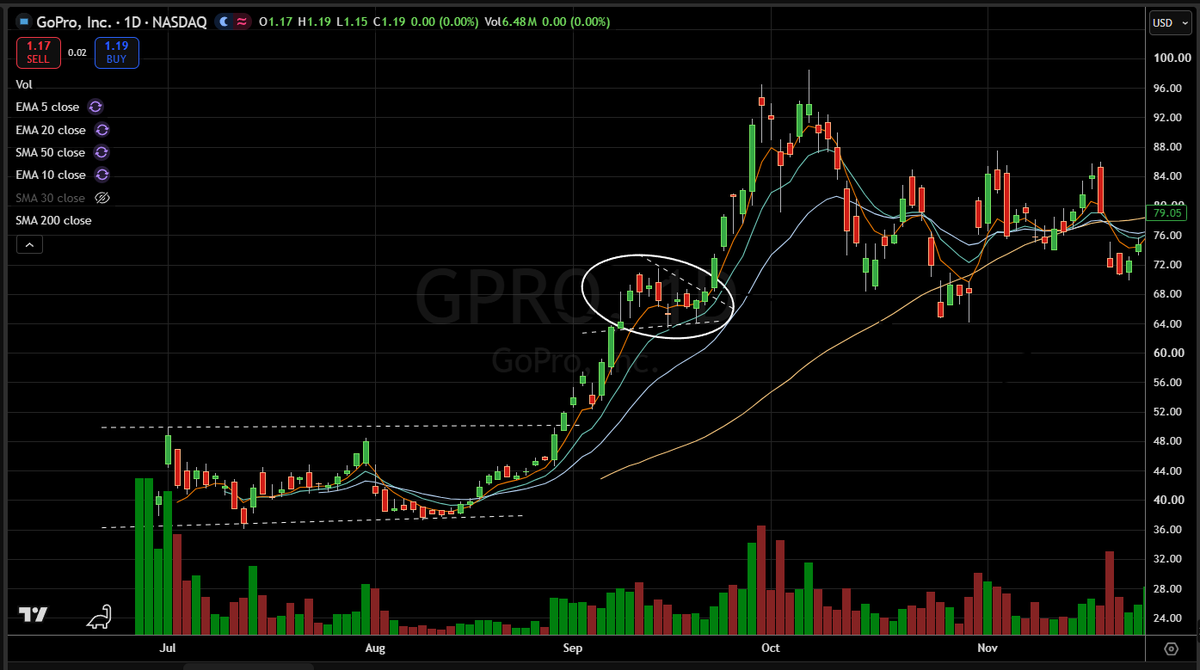
The best trade I’ve ever made from a teaching perspective was probably buying a high and tight flag in GPRO in 2014 when the volume was relatively high, because it taught me so much about how momentum names act when they are in favor and how much power they really have. Up to that point I was much less willing to buy extreme strength like that, thinking it was extended. It hammered home the lesson that strength begets strength, and to always focus on the best of the best because you never know how far they will go.
Worst trade of my career, so funny to look back on: there was a trader who had like 20 screens and just traded by himself at T3 back in the day. Nobody really talked to the guy, he kept to himself. Finally we found out that he makes most of his money trading quad witching days and figuring out where the crazy end of day action would be. We found out one of his names one of those days was AAL. So at the end of the day we all load up on AAL and get absolutely smoked. Cataclysmically smoked in legit seven minutes. Demoralizing isn’t even the word. The lesson there was to focus on yourself, doing what works for you and not trading on any tips! The guy made like a quarter million that day.
If a trader is breakeven after five years of trading, what should they do to move forward?
Stop worrying about PnL and accept that you’re on a lifelong journey. In fact, just worrying about the breakeven point or lifetime PnL is mentally having you trade PnL more than you think. It’s a domino effect: if that’s in the back of your brain, it’s going to cause you to mismanage trades because of the emotional decision making it will lead to.
“PnL is a lagging indicator of your process.”
It’s more important to have a constant focus on the mistakes that are holding you back rather than trying to make a boatload of cash right now. Review, review, review. You’re not doing enough review. I became profitable technically in about two and a half years, but I didn’t really become good until five years. That seems to be the time frame it takes most traders, because you have to physically trade through different cycles, as there are so many different versions of the market in that span.
The BEST part about trading is that the knowledge truly compounds. I can’t believe how much more I’ve learned in years 10-13 compared to 0-9 because of the compounding effect. So overall, don’t worry about how long it’s been. Keep the constant focus on improvement, and that’s where the improvements stem from.
Advice for Aspiring Traders
Have you worked with people who transitioned from non-trading roles into full-time trading? What characteristics or parameters are required before making that transition to maximize the probability of success?
Absolutely! The overarching theme with any successful trader is a focus on extreme discipline. You will not make it through the countless difficult cycles without it. Also, being able to live below your means when you’re transitioning is really important, and having about two years of living expenses saved up. You never know what the market will be like six months down the line. As far as characteristics go, resilience is the most important. Passion fades, and the emotional roller coaster we’re constantly on is not an easy way to go through life.
What are some of the drawbacks of trading for a living that aspiring traders may be naive about?
Great question! The past few years it seems there’s an expectation for the market to provide an easy environment, and some years that’s just not the case. You have to accept that sometimes you have to take what you can get out of the market. It is a grind much more than it isn’t! If you don’t fall in love with the grind, you will simply never have long-term success because the emotional pitfalls are too heavy.
It’s also important to not majorly upgrade your lifestyle after a big year. Coming from a guy who bought a second house in July 2021!
The biggest drawback that nobody talks about though: TAXES! The true account killer.
After how many years of consistency can one start putting serious capital in the market?
There is no right answer here! I think the more important thing to focus on besides consistency is drawdown control. If you’re booming when it’s hot and completely busting when it’s not, adjustments need to be made!
How important is journaling? Do you still do it daily?
EVERY SINGLE DAY! I carve out a two-hour chunk on my weekends to look back on the week as a whole. It is the single easiest way to improve your trading, and most traders seem to neglect it.
How can I become a millionaire with just $10,000?
Falling in love with the grind is the most important part. Read all the trading books you can, study all the greats, look through all the charts of previous years, and look through the @TraderLion model books to see how leading stocks work higher. Study the weekly charts from O’Neil. Live below your means. Work on your pattern recognition above all else. Trade with smaller size and work on your game every single day. Treat it as a life’s mission and take a long-term view. Don’t focus on the day-to-day numbers so much. Focus on the game and the grind above all else.
- Adapt the exits, not the entries. In chop Shake keeps buying the same tight areas but takes profit faster and lowers his follow-through expectations.
- In real bear markets, shrink the time frame. Buy extreme rinse-outs at support, sell into strength at 3–5R, often the next morning, and don’t care if it goes higher.
- Compression in a leader is the fat pitch. Lower highs and higher lows at a “make or break” spot, stacked with weekly, sector and earnings strength, is when he loads up with a tight stop.
- Buy as close to the stop as possible. 30-minute pivots, VWAP reclaims and 20 EMA reclaims let him take large size for the same nominal risk.
- Use size as an asset, then trim. He may start at 30–40% (even 52% in PLTR), trim into the first rip at 5–10R, and let a 10–20% core trail on the 10 and 20 EMA.
- Sizing follows traction. 0.1–0.2% account risk when cold, 0.5–1% when his last 5–10 trades are working.
- Earnings season is grind time. Review every reaction nightly, keep an earnings watchlist, and look for whole sectors moving together.
- PnL is a lagging indicator of your process. Review relentlessly, journal every day, control drawdowns, and watch out for lifestyle creep and taxes.
Keep Learning From Shake
Want more from Shake? Watch his interviews on the TraderLion YouTube channel, and dig into the @TraderLion model books he recommends for studying how leading stocks work higher.
This article is for educational purposes only and is not investment advice. Trading stocks involves risk, and past performance does not guarantee future results. Stocks mentioned are examples from the trader’s own experience, not recommendations.