The Best Paul Tudor Jones Quotes on Trading and Investing

Ameet Rai
Electrical Engineer and Swing Trader focused on achieving super-performance. Through extensive studies of previous super-performance stocks and proprietary data-based research I provide guidance for new traders with an emphasis on building processes and teaching traders how to think and trade for themselves.
Published: December 13, 2025


The Best Paul Tudor Jones Quotes on Trading and Investing
Paul Tudor Jones made $100 million shorting the 1987 crash. He’s been trading for 40+ years and still manages billions. Here’s what he’s learned about risk, psychology, and markets.
Who Is Paul Tudor Jones?
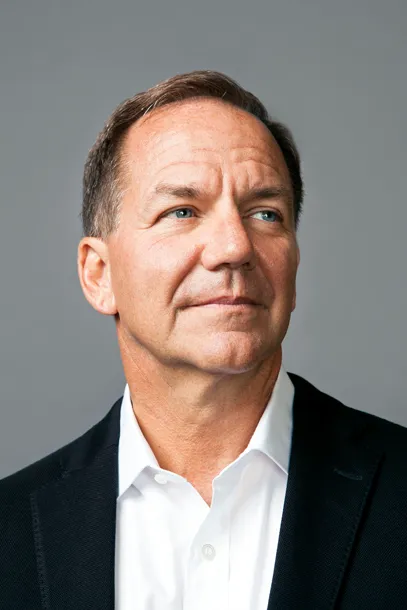
Paul Tudor Jones was born in Memphis, Tennessee in 1954. He went to the University of Virginia, got a degree in economics, and was the school’s welterweight boxing champion. That competitive streak stuck.
He started trading cotton futures at the New York Cotton Exchange in the late 1970s under Eli Tullis, a well-known cotton trader at the time. In 1980, at 26, he started Tudor Investment Corporation. It’s now one of the largest hedge funds in the world.
The trade that made him famous was Black Monday, October 1987. The Dow dropped 22% in a single day. Jones had shorted the market heavily before the crash. He reportedly tripled his money that month. His partner Peter Borish had mapped the 1987 market against 1929 and noticed the similarities.
His net worth today is around $8 billion. He also co-founded the Robin Hood Foundation in 1988 to fight poverty in New York City.
On Risk Management
If Jones has one message, it’s this: don’t blow up. He thinks about losing money more than making it. That sounds pessimistic, but it’s why he’s still trading after four decades. This mindset is the foundation of good risk management.
The most important rule of trading is to play great defense, not great offense.
“Every day I assume every position I have is wrong. I know where my stop risk points are going to be. I do that so I can define my maximum drawdown. Hopefully, I spend the rest of the day enjoying positions that are going in my direction. If they are going against me, then I have a game plan for getting out.”
“I’m always thinking about losing money as opposed to making money. Don’t focus on making money, focus on protecting what you have.”
“At the end of the day, the most important thing is how good are you at risk control. Ninety-percent of any great trader is going to be the risk control.”
“Where you want to be is always in control, never wishing, always trading, and always first and foremost protecting your butt. That’s why most people lose money as individual investors or traders because they’re not focusing on losing money. They need to focus on the money that they have at risk and how much capital is at risk in any single investment they have. If everyone spent 90 percent of their time on that, not 90 percent of the time on pie-in-the-sky ideas on how much money they’re going to make, then they will be incredibly successful investors.”
“If I have positions going against me, I get right out; if they are going for me, I keep them. Risk control is the most important thing in trading.”
“If you have a losing position that is making you uncomfortable, the solution is very simple: Get out, because you can always get back in.”
On Position Sizing
Jones is famous for his 5:1 risk-reward rule. He also scales down when he’s losing and scales up when he’s winning. Most traders do the opposite. If you want to understand position sizing, this is where to start.
“I can actually be a complete imbecile. I can be wrong 80% of the time, and I’m still not going to lose.”
“[I’m looking for] 5:1 (risk/reward). Five to one means I’m risking one dollar to make five. What five to one does is allow you to have a hit ratio of 20%.”
“I will keep cutting my position size down as I have losing trades. When I am trading poorly, I keep reducing my position size. That way, I will be trading my smallest position size when my trading is worst.”
“Don’t ever average losers. Decrease your trading volume when you are trading poorly; increase your volume when you are trading well.”
Losers average losers.
“Never trade in situations where you don’t have control. For example, I don’t risk significant amounts of money in front of key reports, since that is gambling, not trading.”
“I want to make sure that I never have a double-digit loss in any month.”
He also limits risk on any single trade to around 1% of capital. With a 5:1 target, the math works even if you’re wrong most of the time.
On Trading Psychology
Jones thinks ego kills traders. He’s been doing this for decades and still questions himself constantly. That’s the point. If trading psychology is your weak spot, read these carefully.
Don’t be a hero. Don’t have an ego. Always question yourself and your ability. Don’t ever feel that you are very good. The second you do, you are dead.
“First of all, never play macho man with the market. Second, never overtrade.”
“I am more scared now than I was at any point since I began trading, because I recognize how ephemeral success can be in this business. I know that to be successful, I have to be frightened. My biggest hits have always come after I have had a great period and I started to think that I knew something.”
“I think one of my strengths is that I view anything that has happened up to the present point in time as history. I really don’t care about the mistake I made three seconds ago in the market. What I care about is what I am going to do from the next moment on. I try to avoid any emotional attachment to a market.”
“Trading is very competitive and you have to be able to handle getting your butt kicked.”
“I said, ‘Mr. Stupid, why risk everything on one trade? Why not make your life a pursuit of happiness rather than pain?’”
“I spend my day trying to make myself as happy and relaxed as I can be.”
On Market Timing and Trends
Jones made his name catching turns. He uses the 200-day moving average as a defensive tool and pays attention to price before fundamentals.
“I believe the very best money is made at the market turns. Everyone says you get killed trying to pick tops and bottoms and you make all your money by playing the trend in the middle. Well for twelve years I have been missing the meat in the middle but I have made a lot of money at tops and bottoms.”
I always believe that prices move first and fundamentals come second.
“My metric for everything I look at is the 200-day moving average of closing prices. I’ve seen too many things go to zero, stocks and commodities. The whole trick in investing is: ‘How do I keep from losing everything?’ If you use the 200-day moving average rule, then you get out. You play defense, and you get out.”
When Tony Robbins asked if the 200-day moving average helped him predict the 1987 crash, Jones said: “You got it. It had gone under the 200-day moving target. At the very top of the crash, I was flat.”
“You always want to be with whatever the predominant trend is.”
“Markets trend only about 15 percent of the time; the rest of the time they move sideways.”
“When you get a range expansion, the market is sending you a very loud, clear signal that the market is getting ready to move in the direction of that expansion.”
“Fundamentals might be good for the first third or first 50 or 60 percent of a move, but the last third of a great bull market is typically a blow-off, whereas the mania runs wild and prices go parabolic.”
“There is no training, classroom or otherwise, that can prepare for trading the last third of a move, whether it’s the end of a bull market or the end of a bear market.”
On Learning and Growth
Jones didn’t have special information. He just did the work. And he’s still doing it.
“The secret to being successful from a trading perspective is to have an indefatigable and an undying and unquenchable thirst for information and knowledge.”
“You learn more from your losses than from your gains.”
Intellectual capital will always trump financial capital.
“If life ever ceased to be an educational experience, I probably wouldn’t get out of bed in the morning.”
“Sometimes failure is merely chasing you off the wrong road and onto the right one.”
“Failure was a key element to my life’s journey.”
“It is not that we had any unfair knowledge that other people didn’t have, it is just that we did our homework. People just don’t want to believe that anyone can break away from the crowd and rise above mediocrity.”
“You adapt, evolve, compete or die.”